For a full and detailed review of the Community Alternative to the eastern part of the Carrington Relief Road
As many of you are aware, we wrote to Trafford on 16th August formally asking them (once again) to consider the alternative route proposal put forward by 3 Parish Councils and 3 community groups on 8th March 2021.
Trafford responded on 30th September, confirming that they would not consider the alternative route because they believe that that this matter was properly addressed by the Council’s Executive in their deliberations and decisions 18 December 2020 and 27 September 2021.
We have notified the Council that we disagree with their conclusion and have asked (via a Freedom of Information Act request) for the evidence that demonstrates the issues raised by the communities have been addressed. We noted that, for example, in response to this planning application, the Environment Agency describes the flood risk assessments as being “insufficient” to demonstrate compliance with planning policy. This is a key issue for communities, and the experience of New Years’ Eve 2024/25 should have been a wake-up call for Trafford in relation to the importance of the land proposed for the eastern part of the route for protecting local homes and businesses from extreme levels of surface water flooding.
We also raised issues about the route option appraisal process and the very superficial nature of the assessment:
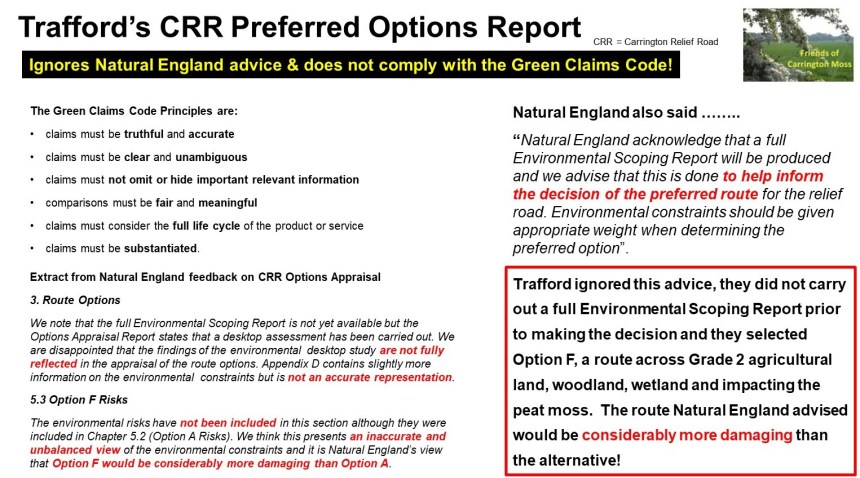
Natural England described the option appraisal as “inaccurate” and “unbalanced” (their words)
Our Independent Transport Consultant concluded that his detailed analysis of the Route Option Criteria “clearly demonstrates that Option A should be the preferred option”
The project team described the traffic data as a “crude assessment“
The community alternative was rejected due to a ‘misunderstanding’ of TfGM’s active travel requirements and Trafford is unable to provide an assessment or feasibility study relating to the active travel routes on, across and around Carrington Moss
the Environment Agency has “not previously been consulted by the council / requested to offer a position upon the potential merits of shortlisted Option A versus Option F or vice versa”
the Council cannot provide an assessment of Option A from the LLFA (Local Lead Flood Authority)
Trafford cannot provide a separate count of anticipated HGV traffic as required by Planning Practice Guidance
Trafford’s solution does not comply with numerous national planning policy requirements and does not follow the mitigation hierarchy (which requires that alternative options that avoid harm must be considered prior to seeking to mitigate or compensate for environmental or ecological harm
Investment in sustainable passenger transport is urgent and must be prioritised – this can only be done by minimising spend on increased road space and could be achieved by adopting the communities’ alternative solution.
Given the above, we do not believe the appraisal met the requirement for the robust data expected when considering all “likely significant environmental effects“, including cumulative effects (for issues such as biodiversity loss, all types of pollution, carbon emissions and/or flooding).
We also raised our concerns about the speculative development to be caused by Trafford’s proposed route weakening Green Belt purposes, deliberately creating Grey Belt, which will encourage additional speculative development. Not only has Wain Estates signalled that they will use Grey Belt designation to allocate their “entire landholding for development“, but their recent response to the planning application also requests that land-take for active travel and environmental/ecological mitigation be minimised, presumably so the development area can be maximised.
We are awaiting responses to our FOI requests and confirmation of when a business case will be available for public review, as Trafford must comply with their Best Value Duty to adopt value for money principles and ensure they manage any risks to their budgets.
With all the above in mind, we would assume that Trafford will approve the solution that offers:
the best value for public money (the least expensive overall to the public purse);
the least harm to residents (minimising health impacts and compensation for pollution-related outcomes, flooding costs, etc); and
the least harm to natural capital assets and biodiversity, including endangered species (a solution, for example, that will not cause ‘County-Scale’ decline in species populations nor require expensive environmental and ecological mitigation proposals that are likely to be challenged by the landowners).
This summer, we have watched the effects of climate change across the UK, Europe and the rest of the world in horror. Wildfires, flooding, extreme heat and crop failure is sadly a reality. The scientists have said that things will only get worse if we don’t act now by cutting carbon emissions and protecting natures carbon capturing forests and mosses.
This is why we can-not understand why Trafford Council is so determined to destroy Carrington Moss (which Natural England confirms is a restorable irreplaceable habitat), constructing 4 major new roads on, across and around it, turning the Green Belt into Grey Belt and enabling yet more development in an area that is now saturated by ever increasing traffic, congestion and health threatening levels of pollution. At a time when the Council should be following the advice of the scientists by restoring carbon capturing peat mosses (that also act as flood defences) and investing in public transport, they are capitulating to the wishes of the developers and spending £ millions of public monies on unsustainable road solutions.
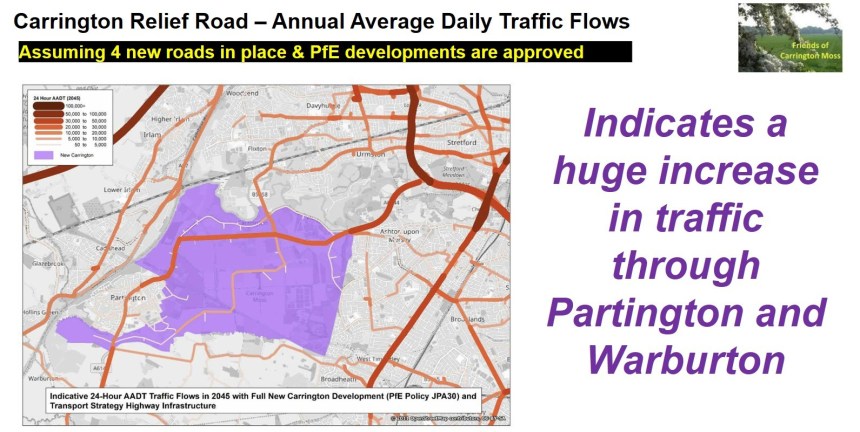
The graphic below, taken from the latest Transport Assessment for the Carrington Relief Road (CRR), shows the predicted average daily traffic flows once the Carrington Relief Road, the Southern Link Road, the Eastern link road and the Sale West Link Road have been built.
Trafford has stated that the CRR will ‘draw’ significant levels of traffic from the M60, the M56, the M6 and the A56. Furthermore, in a recently issued Induced Traffic Technical Note, it states ‘The new trips associated with New Carrington development, plus normal growth of existing trips, will occupy almost all the available Masterplan transport capacity by around 2040’. Effectively, this confirms that over £132million (minimum) will be spent on a new road that will be at capacity in less than 14 years. This is NOT a good use of public money, especially given the significantly negative impact it will have on local communities as described below.
The Friends of Carrington Moss has been doing our own traffic counts for many years. Here we compare the current average daily traffic flows taken from our data with the figures in the graphic above.
Currently the average daily traffic flow on the A6144 between Broadway and Lock Lane in Partington is 7,300 vehicles. In the graphic, it shows that by 2045 the predicted average daily number of vehicles at the same location will be between 20,000 and 30,000.
Also, the average daily traffic flow on the A6144 at the Junction of Warburton Lane and Moss Lane is currently 5,000 vehicles. In the graphic, it shows that by 2045 the predicted average daily number of vehicles at the same location will be between 20,000 and 30,000.
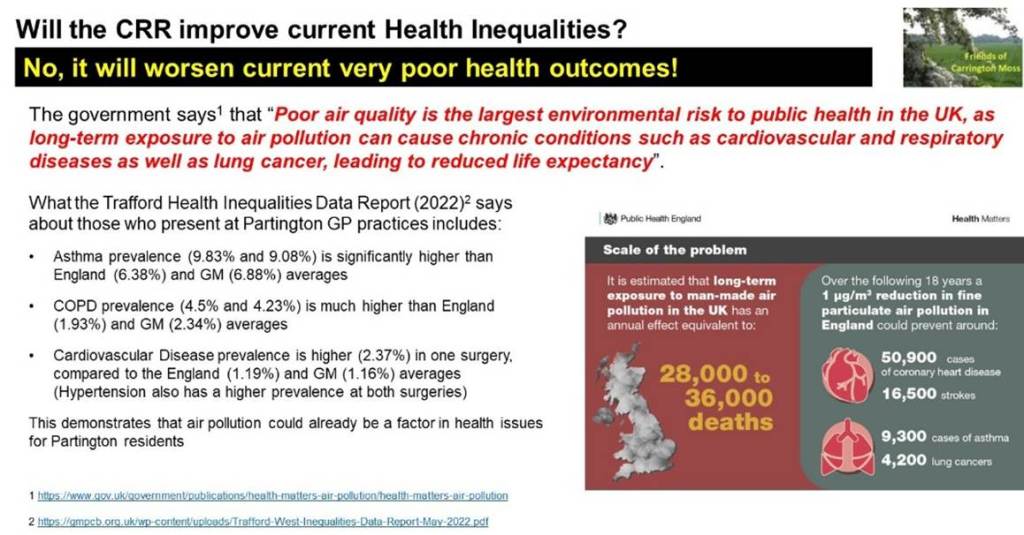
The implications for residents of Partington and Warburton are very concerning. The significant increase in air, noise, light, vibration, dust and water pollution (to say nothing of carbon emissions) will not only have a detrimental effect on their wellbeing but will result in increased prevalence of long-term chronic health conditions, such as asthma, CPOD and cardiovascular disease. These conditions are already a factor for Partington residents, with the Health Inequalities Report (2022) showing significantly higher incidence than the averages for England or Greater Manchester.
Currently, the average daily traffic flow on the Carrington Spur is 25,000 vehicles. By 2045 it is predicted to be anything between 30,000 and 50,000. That means that potentially there will be double the amount of traffic on a road that is already at capacity. Referring to the Junction of the Carrington Spur and Banky Lane, the latest CRR Transport Assessment August 2026 (3.4.41) states ‘it can be concluded that the junction is operating near its absolute capacity with no spare capacity to accommodate additional traffic demands in the peak periods’.
Currently, the average daily traffic flow on Carrington Lane between the Carrington Spur and Flixton Road is 18,000. By 2045 it is predicted to be between 25,000 and 35,000 taking the CRR and the A6144 figures into account. Again, this is almost double the amount of traffic on the local road network which demonstrates that the CRR will reassign traffic onto local roads.
Currently, the average daily traffic flow on Carrington Lane heading towards Sale West is 21,000. By 2045, however, the graphic shows a flow between 10,000 and 20,000. This is unlikely when you consider this figure should include the traffic associated with the development of around 1,500 new homes in Sale West. We will question the source of the figures for the current traffic flows to/from Sale West and Ashton on Mersey as the CRR Project Team appear to have considerably underestimated the volume of traffic.
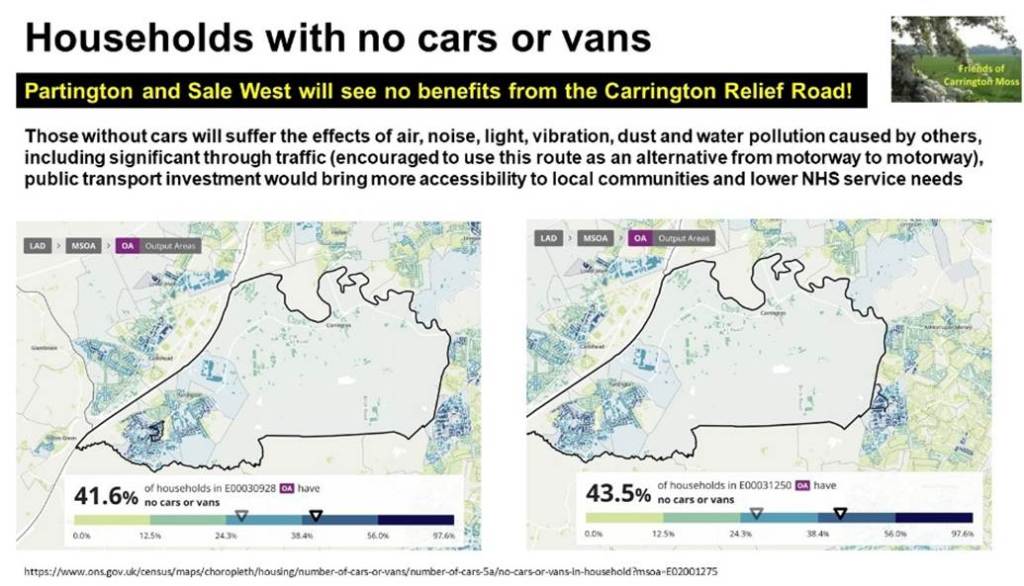
The community put forward an alternative solution back in 2021. Our option would not result in induced or reassigned traffic because it does not involve building new road capacity. That alternative solution enables much more of the allocated funding to be directed at public transport (very important, given that over 40% of households in parts of Partington and Sale West do not have access to a car, according to ONS data).
The community alternative option, which was created following discussions between FOCM, Parish Councils and other community groups, has been repeatedly presented to Trafford, and, in summary, comprises the following:
open the existing A1 route to bypass Carrington Village for improved traffic flow and to reduce congestion during peak hours, ensuring a smoother journey for all commuters.
create a short link (running parallel with Isherwood Road between the A1 junction with Isherwood Road and Carrington Lane) to bypass the new homes on Isherwood Road
provide upgrades to the existing A6144 (resurfacing, removing potholes, improving signage)
improve the public rights of way and permitted routes on, across and around Carrington Moss (including resurfacing, low-level wildlife-friendly lighting and better signage), leading to much greater levels of modal shift, encouraging residents to walk, cycle or horse ride using pleasant, healthy and safe alternatives to the road network (peaceful routes with no harmful pollution).
In addition, our community alternative is considerably less environmentally and ecologically harmful than the route currently proposed by Trafford (which causes ‘County-scale’ decline to red listed birds, will remove 40 hectares of Grade 2 agricultural land from food production, is likely to result in flooding of existing and new homes and, as a consequence of changes in hydrology, could cause permanent harm to the 335-hectare peat moss).
Furthermore, we have looked at other initiatives, such as reopening the former railway line and constructing a bridge across the Manchester Ship Canal (something that is now being considered by Trafford elsewhere in the borough).
Sadly, Trafford has repeatedly ignored our alternative option and has chosen the most environmentally damaging option against the advice of Natural England. We have recently discovered that the traffic numbers in the option appraisal which led to the decision about the route of the road were unreliable and that Trafford had dismissed our alternative option because they misunderstood TfGM’s standards for active travel routes.
Given the now very visible impact of climate change, Trafford should be focused on climate mitigation and nature’s recovery, minimising the destruction of, or harms to, the area’s vital natural capital assets! That is why we have formally requested that Trafford Council reconsider the community alternative option in a fair and balanced way.
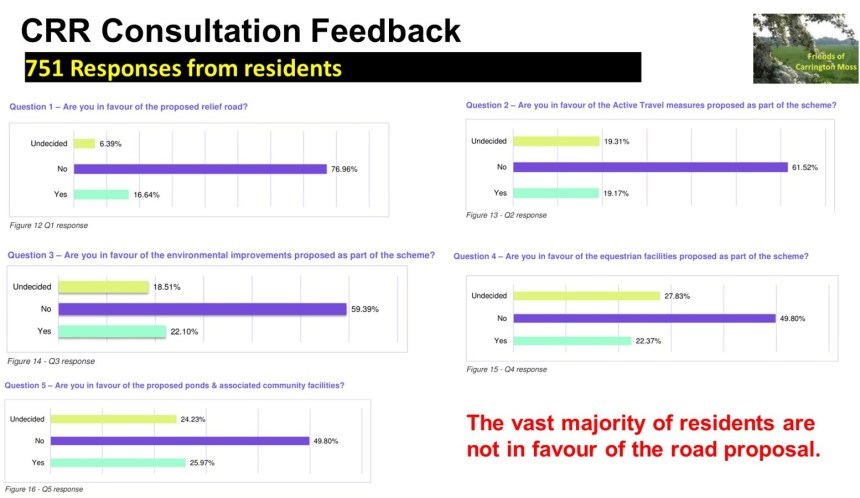
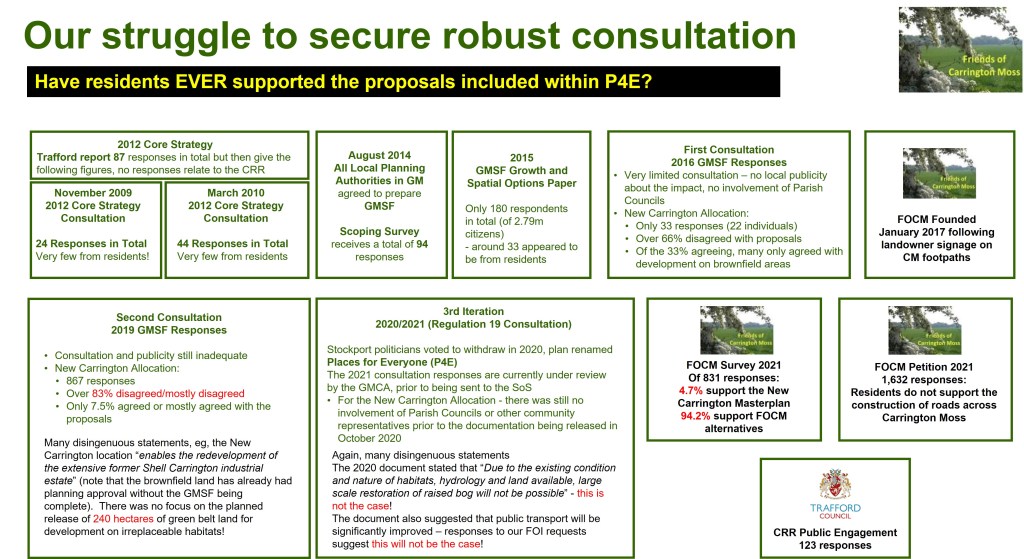
FOCM has analysed the responses to Trafford Council’s recent planning application consultation on the proposed CRR. The results are astonishing, given that we have repeatedly been told by the Council that this new road is desired by residents to “relieve traffic congestion”. Yet local residents sent in responses to this planning application in their hundreds confirming that they do not agree. This is consistent with the feedback to the previous Trafford consultation and the Places for Everyone consultation responses.
The results of Trafford’s previous consultation clearly show that almost 77% of residents are not in favour of the road. The planning application responses were even more stark.
Of the almost 800 responses, we found only 3 that were neutral (had grave reservations but stated they are not wholly opposed in principal), a further 3 are in support and the remainder objected without reservation.
The 3 neutral responses were firms which are located in the area and these, along with several other companies, express concerns about how they will be able to operate when the CRR and its construction impacts their vehicles’ routes and staff access. Several of them state that joint planning and co-operation, initially promised by the Council, has worryingly not materialised. Some state the Council has changed its plans after consultation, which they feel is “underhand and deceitful”. Some say plans for the CRR conflict with their own plans. United Utilities express their dismay that the plans for CRR take no account of their installations, such as mains outlets and are bound to cause problems and infringe laws as they stand. They request that the Council begin to work with them in spite of having, so far, failed to take this obvious step.
The majority of respondents are from households in Partington, Carrington, Sale, Urmston, Stretford, Lymm, Warburton, Warrington and Greater Manchester. They express a wide range of concerns about the proposals for this 2.7 mile road, and a high proportion feel that, at either end of it (the east and west-bound A6144), the areas will experience increased traffic congestion and pollution. Partington residents are well represented and are particularly concerned about traffic.
Residents are aware that traffic cutting through from the M60 to the M6 (and vice versa) will increase the volume on their already busy roads, thus adversely affecting their communities. Some objections are from local councillors, who state the proposals contradict the National Policy and Planning Framework. They also argue that the short CRR will simply link two bottlenecks, one at the Spur Road in Ashton on Mersey and the other at the already traffic ridden centre of Partington.
The horse community (over 1,000 horses are stabled on and around the moss), including a riding school for the disabled, are likewise unanimously not in favour, as well as animal related charities.
Amongst other objections, many quote the minimum £132 million cost, the vast majority of which will be funded by the public sector, with the Council being responsible for any unforeseen expenditure at a time of high financial pressure and very high Council Tax increases.
Many are aware that the road is being constructed in preparation for thousands of houses, warehouses and other roads to be built on a previously protected carbon sink, which the government’s adviser (Natural England) considers to be a restorable, deep peat irreplaceable habitat, home to many endangered species. Trafford’s own documentation confirms that the road will cause “Countyscale” decline to already red listed species!
Given that there should be a focus on climate mitigation, nature’s recovery and the health of our communities, why, over the past 10 or more years, hasn’t Trafford considered alternative, more sustainable transport solutions?
With all the above in mind, we’d like you to ask yourselves, WHO is actually in favour of this financially and environmentally harmful road, which benefits only those who will make profits and dividends from development?
For far too long our politicians have been listening to lobbyists for the big construction companies and have been closing their eyes and ears to genuine evidence (even that produced by the Office for National Statistics). They have certainly ignored feedback from their own citizens.
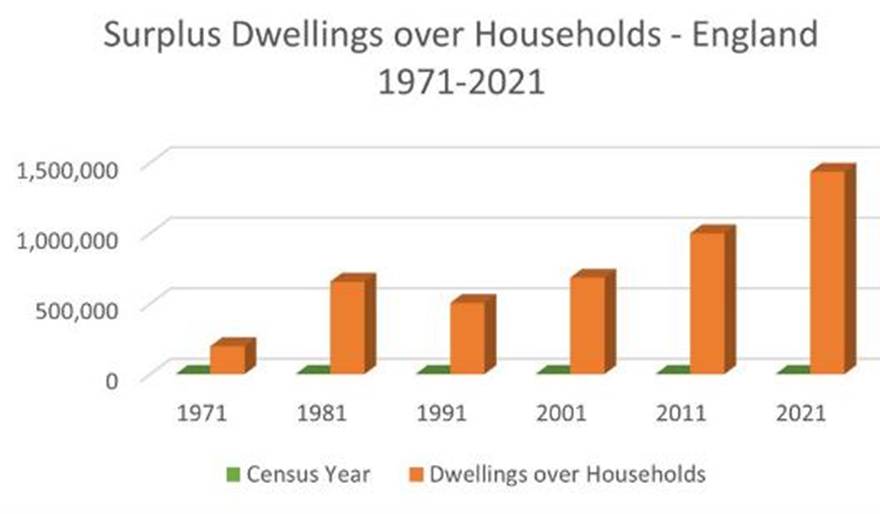
The Community Planning Alliance (CPA) Homes for Everyone report debunked many of the myths around market housing land supply, confirming that there are 1.5 million empty homes that could be renovated, there is planning permission to build over 1 million homes that have not yet been started, and sufficient brownfield land to build more than 1 million homes. In addition, CPA proposed some novel options to incentivise those with (around 26 million) empty bedrooms to rent them out and to repurpose the more than 165,000 empty commercial premises to support housing need.
The government should be making it easy for Councils and developers to maximise these routes to meet their housing aspirations. Instead, Ministers are intent on changing planning rules and weakening the regulations that protect our important natural capital and ecosystem services.
This will not make housing more affordable!
As CPA highlighted in their Veering Off Plan report, despite purporting that their policies will boost housing affordability, the government is neither directing supply nor improving confidence in demand, leaving all stakeholders uncertain and under pressure!
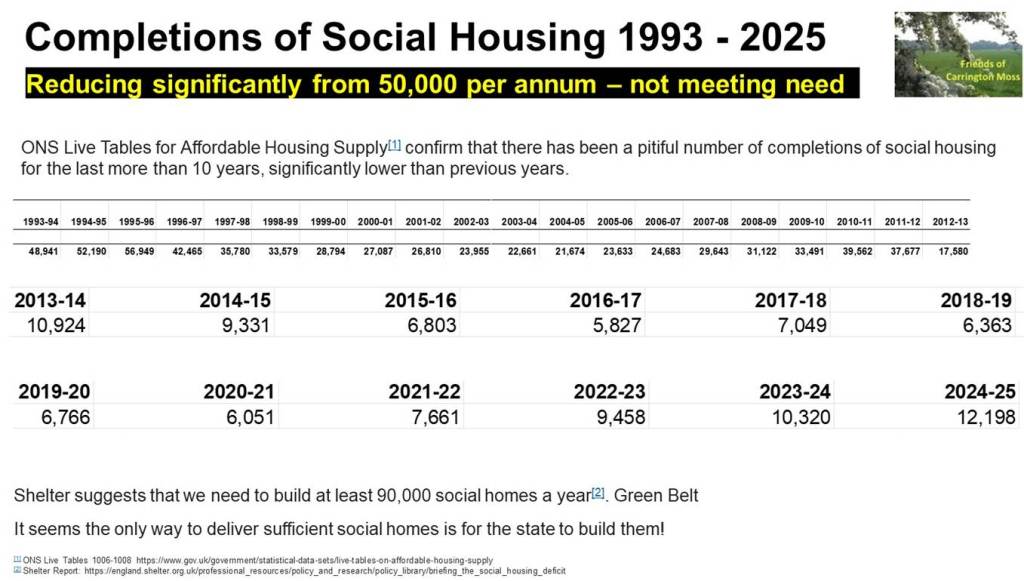
One of the main reasons housing affordability has rapidly declined over the past 20 years is the lack of focus on genuinely affordable homes (social housing), with construction of this essential element of our housing toolkit reducing from over 50,000 per annum in the 1990s to less than 10,000 per annum in 9 of the last 12 years.
Given the Right to Buy scheme, which, along with the lack of new builds, has seen availability of social housing more or less collapse during that 12 year period, successive governments have missed a trick. The focus on developer-led market housing has not only resulted in huge increases in house prices (for the reasons set out in the recent IPPR report), it has significantly reduced choice for those who cannot (and some may never be able to) afford to buy, with rental costs exceeding £1,000 a month “in more than half of British neighbourhoods“.
Had there been less lobbying and more emphasis on need, governments would have introduced policy to maximise social housing supply, significantly increasing the number of homes available at an affordable rent. This would increase competition for private landlords, bringing down all rent levels (and enabling those who could get onto the housing ladder to save up for their deposits). It would provide security and stability for families, significantly decrease homelessness and would also reduce the costs to the public purse, releasing funding for other priorities.
But that did not happen, so where are we now?
Well, the narrative that we have a market housing crisis and that housing is so expensive because there are not enough homes to go around is pushed by developer lobbyists and is extremely misleading – overall housing stock levels have consistently risen at a higher rate than population growth, meaning that there must be a huge number of second homes, holiday homes, airbnbs and empty homes.
Many new homes are purchased by investors, landlords and speculators, which does not increase supply for those who need them most and does keep house prices high (as they are viewed as a way of making money through financial speculation, rather than just being a place to live).
The IPPR report, mentioned above, highlights that “recent governments have focussed on boosting market housing supply through a combination of changes to planning rules, liberalising access to mortgage finance, stamp duty land tax cuts and holidays, and other demand-side measures like help to buy equity loans”. They also identify a number of challenges, such as resourcing concerns for statutory agencies, the dependence on the speculative model of development, and the focus on market housing, rather than local need.
There is significant evidence that the typical supply/demand approach does not work for market housing (and let’s be clear, if it did, there would be a lot of very unhappy homeowners, who would see their asset fall in value and possibly negative equity on their mortgages). Another issue to consider is that, if additional housing supply was to cause sharp declines in house prices, this might raise concerns about the financial stability of mortgage lenders (mortgages are based on the value of a house and if an owner defaults, the lender should be able to recover their money via the asset underpinning the loan – if its value decreases then the banks would not be able to secure a return on their investment).
This excellent blog from Alternative Cornwall discusses the relationship between housing, its status as an asset (as well as a place to live), deregulation and the divergence of wage growth, compared to house prices. The argument in the blog is supported by this article from Bank of England researchers, effectively confirming that one of the key issues is that houses are now considered to be assets, with prices being determined by the role of finance (ie the Bank of England, historically low interest rates, credit availability, investor demand, etc). Other articles say similar things, this one, for example, highlights that “the rise in real house prices since 2000 can be explained almost entirely by lower interest rates“.
So, increasing market housing supply is unlikely to significantly reduce house prices, in fact, at a local level, they could cause house prices to rise (because of perceived gentrification, for example). But – the government’s policies have been great for the asset-wealthy few, who have seen house prices go in only one direction – UP!
Current policies do nothing for the most vulnerable in our society, or for those who are enduring the current cost of living crisis and, of course, the recent increases to interest rates have radically affected affordability for a typical homeowner.
Those policies also do nothing for the environment or nature, which have been attacked and scapegoated to facilitate market housing permissions, which will only be built out when the developer can achieve their desired profit margins.
Even with the government’s recent investment in social and affordable housing (£39 billion), they are only scratching the surface of the issue following decades of decline. Those big corporations will build what they want, when they want, where they want – but they are not focused on what is needed in our communities and authorities should be doing much more to prioritise community participation!
Change is crucial because it is very clear that decision-makers are NOT taking radical action to tackle housing need or affordability – they are just continuing to pander to the powerful!
Local, regional and national policy highlights the importance of ensuring new development does not impact the health and wellbeing of both human and wildlife species. Whilst this has been partially recognised in the planning application, we do not believe Trafford’s assessments acknowledge the serious impacts that will be incurred by local residents and conservation areas. This is particularly the case given the flawed approach to calculating the anticipated traffic volumes (many of the expected journeys have been excluded from the numbers and comparisons have been made with districts that have access to wide-ranging public transport services, including railway stations).
The National Planning Policy Framework (NPPF) suggests at paragraph 96 that planning policies and decisions should aim to achieve healthy, inclusive and safe places which (c) “enable and support healthy lives, through both promoting good health and preventing ill-health, especially where this would address identified local health and well-being needs and reduce health inequalities between the most and least deprived communities”.
The Carrington Relief Road (CRR) certainly does not comply with this policy. It will generate huge increases in traffic, not only along the road itself, but also along the east and west-bound A6144. This will lead to similarly huge increases in air, noise, light, vibration, dust and water pollution (including from road run-off). The risks and the impact have been substantially understated, the road will cause ill-health, it will increase health inequalities, and it will affect our financial, mental and physical wellbeing.
The public transport improvements promised for Carrington, Partington and Sale West in the 2006 Unitary Development Plan and the 2012 Core Strategy were never delivered (in fact, bus services have been severely depleted over the past 10 or more years) and the more sustainable solutions set out in those plans were never actioned.
Whilst we can draw on lots of research, including, for example, this Public Health briefing, which suggests that less affluent areas “have a higher density of main roads, leading to poorer air quality, higher noise levels and higher collision rates”, the concerns that have been repeatedly raised about the road are not reflected in the Environmental Assessment. The research goes on to highlight that health inequalities are further exacerbated because “residents of deprived communities tend to travel less than the better off but feel the impact of other people’s travel. In short, increasing car dependency has led to increasing unfairness” (our emphasis).
The vision for New Carrington is a clear example of this, with ONS data showing that around 40% of those living in Partington and Sale West do not have access to a car.
And don’t let anyone kid you, whilst electric vehicles may reduce air pollution somewhat, there will be no radical reduction in particulate matter (PM2.5s), caused by brakes, tyres and dust, and for which there is no safe level. Yet it does not appear that local monitoring of existing PM2.5 and PM10 has taken place and, as there is no separate count of HGV traffic (despite it being a Planning Practice Guidance requirement), there is no indication of whether the anticipated increase in HGV numbers (and the associated increase in emissions) have been taken into consideration in the Environmental Assessment.
Trafford should be very concerned about increasing our exposure to these pollutants. These particles will continue to contribute to prevalence of respiratory diseases, cardiovascular issues, and cancer and the huge increase in traffic caused by the CRR will aggravate and accelerate symptoms.
That same Public Health report suggests that “it has been estimated that half of the UK’s £10bn cost per annum of air pollution comes from road transport”, meaning that the new road will add substantial costs to the public purse, whereas the alternative, more sustainable solutions would reduce pollution and would also reduce those costs.
The Environmental Assessment found no significant effects of air pollution on human or ecological receptors either during the construction or operation of this road and the documentation suggests that the PM2.5 modelling results were ‘negligible’. This is not a credible outcome given the number of cars and HGVs that will be using the road. There appears to have been no assessment of the impact on vulnerable residents, including in relation to children on journeys to and from schools.
It is astounding that significant levels of traffic can be “drawn from” the M60, the M6, the M56, the A56 and other roads, along with the additional traffic due to new developments (the Trafford Green Hydrogen development will result in an additional 700 HGV movements a day, for example, with more from Voltage Park and other proposed developments in the area), causing considerable congestion, and yet, Trafford says the impact of pollutants will be ‘insignificant’!
It certainly will not be ‘insignificant’ for the vulnerable communities at either side of the scheme. Trafford’s Health Inequalities Data Report (2022) suggests that Partington residents, for example, are already suffering from the effects of air pollution, with those presenting at the two general practices having a significantly higher prevalence of pollution-related conditions than elsewhere in Greater Manchester or in England as a whole.
The Environmental Assessment incorrectly suggests that any change in the prevalence of Cardio-Respiratory Conditions, for example, will be temporary. The traffic levels, dust, congestion, and pollutants will permanently increase the risks, particularly for vulnerable residents.
Those living close to junctions, such as at Isherwood Road and Banky Lane are likely to suffer significant adverse effects of pollutants but to be clear, so will residents all along the east and west-bound A6144.
But, the report does not identify the huge level of adverse effects for affected communities and does not demonstrate that these extensive effects are neutralised by the mitigation measures proposed.
Active travel users, including horse riders, will be substantially affected by emissions both during construction and once the road is in operation. Current recorded and unrecorded public rights of way will also be severely harmed because there is almost zero motor vehicle traffic on those routes today.
As mentioned above, there are no ‘safe’ levels of PM2.5 emissions. Repeated tropes about the benefits of the proposed introduction of active travel routes are meaningless. Walking or cycling adjacent to a major road, which has a minimum of 30,000 cars and over 3,000 HGVs a day travelling along it will not be healthy, safe or pleasant. Just breathing in the PM2.5 emissions alone will cause significant increases in respiratory-related health episodes.
With particulate matter lodging itself in various organs, air pollution has been linked to many health problems, far beyond the lungs, including in the brain and for babies still in the womb. At the other end of life, components of air pollution also seem to be ‘accelerating the process’ of dementia.
The seriousness of air pollution related health problems has been highlighted in this recent article, which confirms dirty air harms the organs in our body, affecting blood vessels, making heart attacks and strokes more likely. Inflammation in the lungs has caused deadly tumours, with around one in 10 lung cancers thought to be caused by air pollution in the UK. A report by the Royal College of Physicians estimates there are around 30,000 deaths a year attributable to air pollution.
The health impact of air pollution appears to be consistently devalued in the various planning application documents, which state, for example, that the impact of air pollution on users of sports facilities is ‘not significant’. Yet recent research (Air Pollution and Its Impact on Health and Performance in Football Players) suggests that “Even short-term spikes in air pollution have been shown to impair performance, increase respiratory symptoms, and delay recovery in athletes”.
A recent study related to improvements to air quality in the Bradford Clean Air Zone found that air pollution was a contributing factor for 35% of GP visits for breathing issues and 49% of A&E visits for conditions including asthma and chronic obstructive pulmonary disease. The introduction of the clean air zone resulted in a drop of almost 600 GP appointments a month, including 134 fewer GP visits a month for people with problems with their cardiovascular health.
The Full Business Case for the road should, therefore, include the costs associated with additional primary and secondary healthcare service requirements.
Air pollution also affects ecological sites, yet the impact on these was also dismissed as ‘not significant’ (assuming mitigation measures are implemented). Again, we are concerned that the traffic numbers need to be revisited, along with the cumulative impact of all construction in the area.
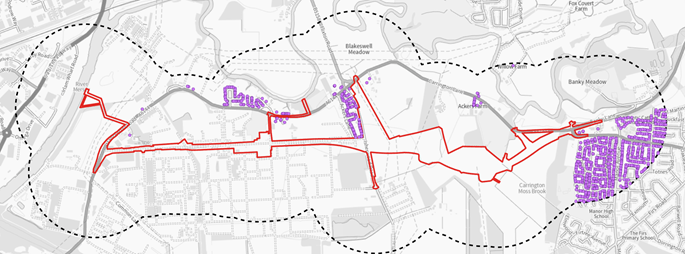
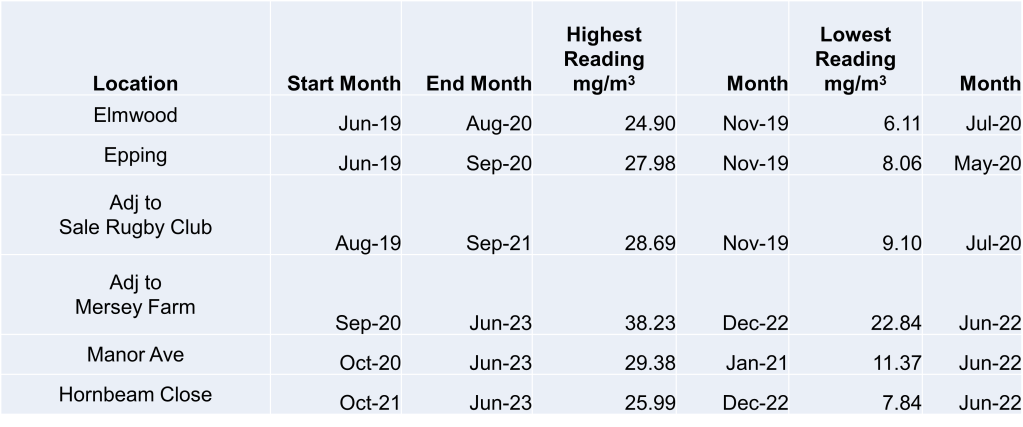
The Friends of Carrington Moss has undertaken air quality monitoring (NO2) at several locations in the area, over a number of years, using diffusion tubes that were sent to an official laboratory. The readings will be a useful comparison in determining the level of increased emissions if the road is approved.
We are aware that Carrington Parish Council has invested in an air quality monitor, which covers a range of pollutants, but sadly the readings are not up to date on the website.
So, who will benefit from the road?
Whilst it is clear that those citizens living in the around 40% of households with no cars will not benefit, we should ask ourselves how much of an advantage it will be for any resident to be at a much greater risk of suffering the extensive health and wellbeing impacts of air, noise, light, vibration, dust and other pollutants, caused by the sheer volume of traffic that will be using this road.
Our alternative solution, which would remove the eastern part of the CRR, would significantly reduce the adverse effects of the road because it would no longer be attractive to through traffic, limiting the number of vehicles drawn from the motorways through our residential areas. There would be many other benefits for local residents too!
Not current or new local communities in the surrounding areas, who will suffer from significantly increased traffic, more congestion and the health consequences of air, noise, light, vibration, dust and water pollution, many homes will also be at a considerable risk of flooding
Not horse riders, walkers or cyclists who frequently use the traffic-free routes on, across and around Carrington Moss, whose current safe, healthy and very pleasant trips will be fractured by huge volumes of traffic, they will be required to walk or ride alongside hundreds of highly polluting vehicles, travelling at speed, which will be unsafe, unhealthy and very unpleasant
Not the red listed birds or the endangered wildlife species that breed and feed on Carrington Moss, their homes will be destroyed, their foraging corridors shattered, their lives at risk as victims of roadkill
Government data makes it clear that there are many households in the area which do not have access to a car. Building a new road will not benefit them at all (but they will still suffer the health consequences of increased pollution that are caused by others driving through their areas).
Over the past almost 10 years, despite confirming that this area is poorly served by public transport, Trafford has been unwilling to explore more sustainable alternatives, such as those proposed by the Friends of Carrington Moss.
We hope you will support our campaign to remove the Eastern part of the Carrington Relief Road (CRR) from the plans. This will bring numerous benefits to local communities and users of the moss and will reduce the costs to the public purse.
The submission of a planning application for the road is expected before Christmas. Once it has been validated by Trafford’s planning team, the documents will be made public, and the Friends of Carrington Moss will review them over the following couple of weeks. We’ll share our findings on social media, in our newsletter and at our online public meeting.
In the meantime, please follow, like and share our posts on social media and don’t hesitate to send any comments you may have to friendsofcarringtonmoss@gmail.com.
Breaking News: The Carrington Relief Road Planning Application is expected to be validated in early January, please keep an eye on our website and social media for more information.
We want to protect our local peat moss and other ecological assets, but we can’t do this alone. Will you help us to prevent the devastation Trafford’s plans will cause to this beautiful place?
It is a complete betrayal of current and future generations to destroy a 335 hectare irreplaceable habitat, productive Grade 2 agricultural land, woodlands and wetlands, impacting the 15 sites of biological importance and the site of special scientific interest in our area, further depleting the populations of red listed birds and endangered wildlife that have made Carrington Moss their home. Trafford’s plans for 4 new roads on and across the mossland will also cause a huge rise in traffic, increasing air, noise, light, vibration, dust and water pollution (to say nothing of carbon emissions) and will also result in many more motor vehicle accidents (which could be very dangerous given the number of HGVs carrying hazardous materials through the area).
The best start is to write to your local Councillor to tell them how you feel. Below is a template letter that you can edit to suit your personal concerns, then email it to you Councillor. Details of your Councillor and their email address can be found at this link.
Secondly, you can add your name to our mailing list to receive our newsletter at this link and follow us on facebook and twitter. Please share our posts with your friends, family and neighbours and encourage them to get involved too.
Finally, help us with our fund raising by joining our 200 club. It is just £22 for a year’s subscription (less than £2 per month) and you will have the chance of winning one of 3 cash prizes each month for the 12 month period. The more people who join the 200 Club, the higher the prize money. You can also subscribe to easyfundraising and register the Friends of Carrington Moss as your beneficiary. This does not cost you a penny but whenever you buy anything online – from your weekly shop to your annual holiday – you will raise free donations for us.
Template Letter
Dear Councillors
I am writing to express my deep concerns that Trafford Council has released 169 hectares of Green Belt for development. The vast majority of that land is a peat moss that is considered by Natural England to be both irreplaceable and restorable. Peat mosses are one of nature’s most effective carbon capturing habitats. Peatlands make up less than 3% of land on earth yet they store twice as much carbon as all the world’s forests combined. Here in Trafford, we have our own precious peatmoss, but instead of protecting it, the Council plan to decimate it and destroy one of nature’s best carbon sinks, significantly reducing Trafford’s ability to be Net Zero by 2038.
Trafford’s plans also affect productive grade 2 agricultural land. At a time when food security is a priority, why is the Council even considering building on land that produces food? They plan to fell thousands of trees to accommodate development. Why, when there is so much brownfield land available in Trafford and elsewhere in Greater Manchester?
The moss is also home to many red listed birds such as the Willow Tit, Skylarks and Lapwings and rare mammals like the water vole and bats, not to mention all the other fauna and flora here. This development will destroy and fracture their habitat having a devasting impact on local biodiversity.
In 2018 Trafford Council declared a climate emergency. Today national and international headline news shows the devastating effects of climate change and locally residents are frequently dealing with the aftermath of flooding and are regularly receiving flood warnings. Yet the Council considers there is just cause to build roads, warehouses and houses on land that is a natural flood defence, storing huge amounts of water every year.
In addition to the increased risk of flooding and the loss of an irreplaceable habitat, local residents will be adversely impacted by the development on Carrington because:
There is no committed funding for sustainable passenger transport in an area that is currently one of the poorest served communities in Greater Manchester for public transport. The only transport commitment is the Carrington Relief Road, which is currently estimated to cost at least £132 million and will bring no relief to local communities, as it will induce through traffic onto local roads, including the A6144 through Partington and the Carrington Spur, which are already at capacity. TfGM has announced plans to expand the rapid transit network in their 2040 Transport Strategy, yet despite New Carrington being the largest development in Places for Everyone, there are no plans to bring trains or the tram to Carrington, even though there is a ‘live’ railway line that runs through the allocation. The £132 million would be better spent reopening this line for the benefit of the communities of Warburton, Partington, Carrington and Sale West.
No sustainable freight transport options have even been proposed, despite the proximity to the Manchester Ship Canal and the former railway line and despite the fact that this development will lead to an increase of thousands of additional HGVs on local roads every single day!
There will be an adverse impact on the health and wellbeing of local residents as there will be a significant surge in air, noise, light, vibration, dust and water pollution caused by the huge increase in traffic, including HGVs, due to the lack of sustainable transport options.
There will be challenges relating to school places, along with GPs, dental surgeries and other healthcare services (which are also struggling to meet current demand).
I am not anti-development however New Carrington will not be a sustainable development. The National Planning Policy Framework defines the objective of sustainable development as “meeting the needs of the present without compromising the ability of future generations to meet their own needs” (paragraph 7). It will decimate a carbon capturing peat moss, significantly reducing the ability of future generations to absorb carbon. It will destroy important biodiverse habitats that are home to endangered species therefore removing the opportunity for future generations to benefit physically and mentally from these local green spaces. It significantly reduces the opportunity for future generations to produce their own food locally. As demonstrated by the Community Planning Alliance (and the calculations in the Places for Everyone Plan), there was no need to release any Green Belt to provide land for housing as there are enough brownfield sites to meet housing need. There certainly is no need for Trafford to implement plans that will be both detrimental to local communities and are so destructive to our natural environment!
Have you noticed changes taking place on and around Carrington Moss? These changes largely involve the removal and loss of natural habitat or longstanding features of the landscape. Some are taking place without any planning permission or council oversight at all.
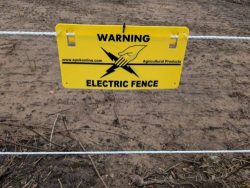
Residents have noticed changes on Isherwood Rd (on the left as you drive in from the A6144). A large vehicle was observed removing hedgerow recently. The site was left with ground disturbed and an electric fence installed.
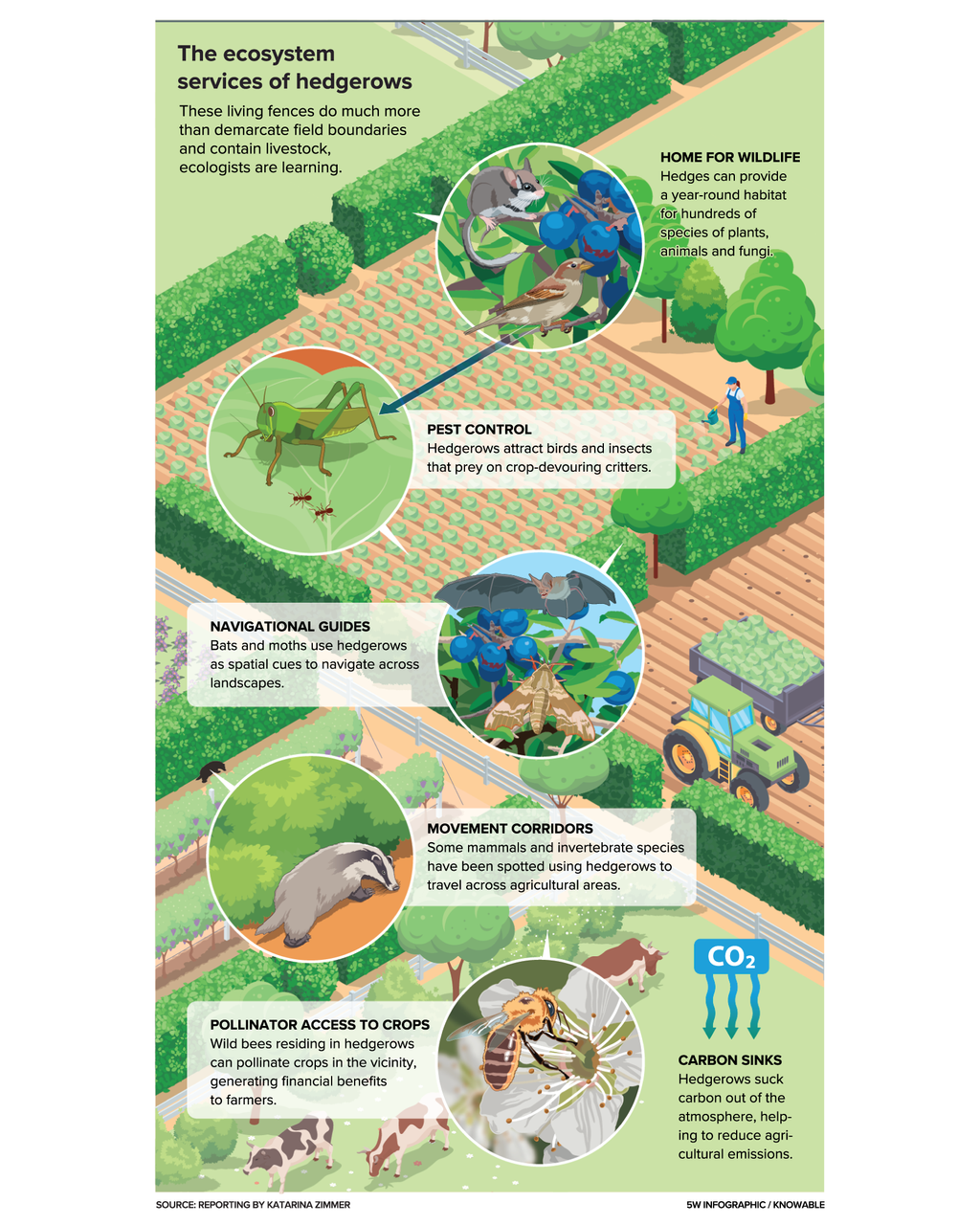
Many hedgerows are considered to be protected priority habitat. They are vital for a wide range of species, including birds, insects, and mammals, and provide essential movement and feeding corridors for wildlife. Because of their high ecological value, the conservation, restoration, and enhancement of hedgerows are typically a material consideration in planning decisions. Yet, if there is no planning application, there is no protection and no consideration of the Hedgerows Regulations 1997. Hedges and trees also protect the land from soil erosion and flooding, particularly in areas that are subject to significant surface water flooding, like Carrington Moss.
Sadly, this hedgerow destruction is not the only example. The temporary road to the planned Battery Storage System (BESS) will also damage the natural environment. That environmental damage will be carried out under ‘permitted development’ rules. This is development which requires no planning permission, there is much less oversight and NO environmental assessment! So, huge harm to the deep peat in the area, perhaps impacting the wider mossland, no protection for wildlife and birds or the habitats they use for breeding and feeding. The BESS itself will be adjacent to a Grade A site of biological importance, and the developer identified 79 bird species that will be impacted by their scheme.
Elsewhere on the moss, despite alternatives that would reduce car use to their site, MUFC has created an overspill car park on productive Grade 2 agricultural land, without any planning permission, again impacting wildlife corridors and the land used by red listed ground nesting birds, such as the skylark.
In addition, numerous large established trees were felled at the back of the National Grid site, leading to the forestry Commission posting notices forbidding any further tree felling activity without permission.
Nearby, the copse at the junction of Carrington Lane and the Spur Road has been stripped of its trees and shrubs, degrading the land before any potential planning application is submitted. The remnants of this vital former bird and wildlife corridor can be seen opposite the Mersey Farm pub
So, biodiversity can be seriously harmed without a planning application being put forward and this is all happening in addition to the destruction of the natural environment that will be caused by the proposed developments on and around Carrington Moss, including the Carrington Relief Road.
It cannot be sustainable to further deplete the populations of threatened or endangered species. And it is not only the birds and wildlife that suffer, without those trees and hedgerows, where do you think all that water will go??? Your homes and gardens, your health and wellbeing could be seriously impacted – so continue to share your photographs of all the damage being caused on and around Carrington Moss and let your councillors know what YOU think.
What is it? What are the key issues? and Why is it important for residents to respond?
As you know, the proposed developments on and around Carrington Moss are huge! 5,000 houses, 350,000m2 employment space and 4 major new roads, all threatening the 335 hectare peat moss (restorable irreplaceable habitat), the productive Grade 2 agricultural land, the woodlands and the wetlands, and all impacting 15 sites of biological importance and a site of special scientific interest, to say nothing of the populations of numerous red listed birds and endangered wildlife species.
Because of the size and scale of the proposed schemes, in addition to the typical costs that would be incurred when they put forward a planning application, developers will be required to contribute to the strategic requirements (such as roads, buildings to support education and healthcare, and utilities), which Trafford describes as ‘hard’ infrastructure. These costs would not have been required had the development been focused on previously developed (brownfield) land, rather than on former Green Belt and greenfield land in an isolated, unsustainable location.
The consultation documentation aims to set out the proportionate financial contributions for schemes that have not yet secured planning permission.
The strategy focuses on those so called ‘hard’ infrastructure items and supposedly prioritises the delivery of New Carrington “in a comprehensive and coordinated manner”. The document confirms (figure 19) that almost half of the identified ‘hard’ infrastructure costs will be funded from developer contributions, and the other half will be funded by the public sector and other sources.
Balanced? Sadly not!
Developer contributions are limited by government guidance. This means that, for a scheme to be considered viable, developers must achieve a certain level of profit. The contributions developers pay cannot be increased to the extent that the scheme would be considered unviable (ie they do not make the necessary level of profit). So, if there are any excluded or missing costs not incorporated within the calculations (and there are a lot of them), the proportions shown in the graphic above are very misleading.
The total contributions to be paid by the public sector should be explicitly and transparently shown, rather than covertly hidden in an appendix or not included at all! It is vital that communities understand the full cost of destroying our essential natural resources to facilitate building in such an unsustainable location.
The biggest issue is the lack of consideration of harms to, or destruction of, natural capital assets.
Given the extensive environmental and ecological harm/destruction to be caused as a consequence of Trafford choosing this location for development, the calculations should include the costs related to the mitigation of, or compensation for, the loss of Green Belt, the cumulative harm to natural capital assets (such as, for example, the peat moss, the woodlands, and the farmland). These have been explicitly excluded from the costs and subordinated to a future phase of the masterplanning work.
This means that the information provided in the documentation is incomplete and does not reflect the actual costs to be incurred if all the proposed developments go ahead.
Effectively, in omitting what we are calling the ‘Natural Infrastructure’ strategy from these calculations, the harms can be caused but funding may NEVER be available to provide the obligatory mitigation and compensation.
Why are we concerned?
Take a look at our response (here), but, in summary, not only have the natural infrastructure requirements been shelved to some point in the future, but our suggested amendments to the proposals have been summarily dismissed, resulting in unnecessarily inflated costs for the public purse.
The cost of the road schemes, for example, would be significantly reduced if our alternative proposals were accepted.
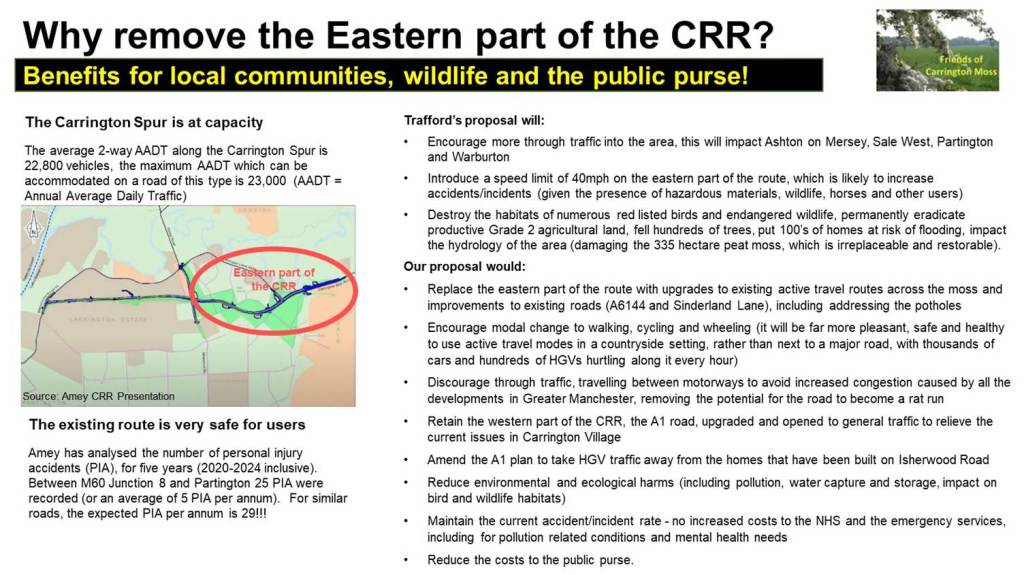
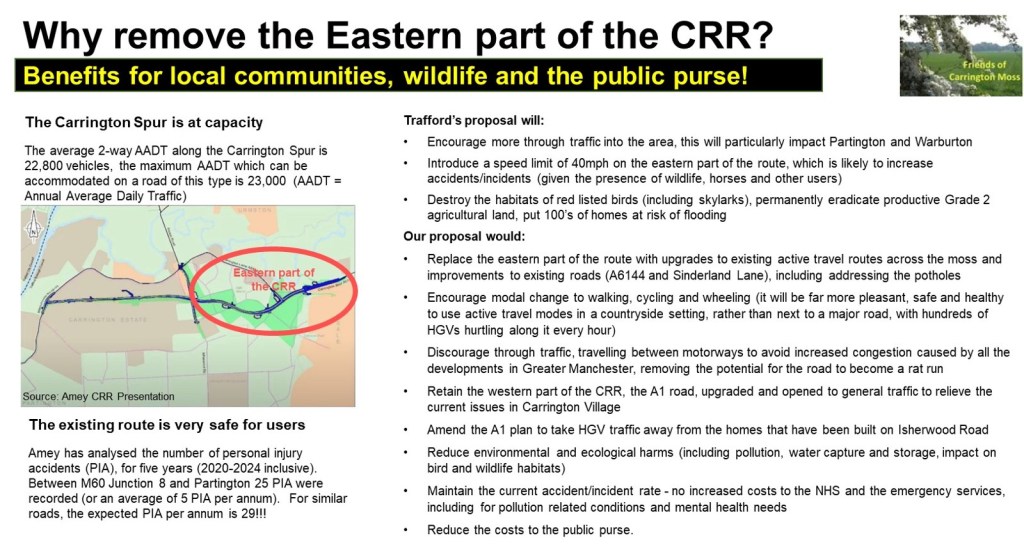
The eastern part of the Carrington Relief Road (CRR), across the moss, could be replaced with upgrades to existing active travel routes and improvements to existing roads (A6144 and Sinderland Lane). This would encourage modal change to walking, cycling and wheeling (it will be far more pleasant, safe and healthy to use active travel modes in a countryside setting, rather than next to a major road, with hundreds of HGVs hurtling along it every hour). It would also discourage the huge levels of induced traffic that will use this road, travelling between motorways and significantly impacting Partington and Warburton. The western part of the CRR, the A1 road, should be upgraded and opened to general traffic as planned to relieve the current issues in Carrington Village. The plan for the A1 should be amended to take HGV traffic away from the homes that have been built on Isherwood Road. This would require a very short road to run in parallel with Isherwood Road/Ackers Lane, rather than a new road all the way to the Carrington Spur.
The latest information received from the CRR team[1] shows that the current road (A6144) is much safer than an average road of the same type and that there is ZERO capacity to increase traffic on the Carrington Spur. Trafford should, therefore, not be proposing a new road that will allow traffic to travel at much higher speeds (particularly given the hazardous materials carried by some of the HGVs), or encourage more through traffic into the area.
Because it includes the eastern part of the road, the current CRR proposal unnecessarily inflates the cost of construction and ongoing maintenance (including for the attenuation ponds needed to capture all that water[2] currently stored on the moss), and the costs of the mitigation needed to address air, noise, light, vibration, dust and water pollution, along with other environmental enhancements. Costs will also increase for the NHS and other emergency services because of increased pollution and traffic accidents/incidents, and there is likely to be an upsurge in the requirement for mental health services due to the stresses caused to local residents because of construction, congestion, the loss of green spaces, and, possibly, future flooding!
Facilitating vehicle access onto Firsway from the new Sale West developments (1,500 homes) will significantly increase traffic and will result in that road becoming a rat run from the M60. It will require the felling of hundreds of trees, drastically affecting the wildlife and birds and impacting the dark skies in this area. It will also increase safety concerns on Firsway and, consequentially, the costs to the NHS/emergency services of dealing with any resulting pollution related health conditions and accidents/incidents on the road network. Limiting access through the Firs Plantation to active travel users only, would not only reduce the costs of constructing the Sale West Link Road, it would also reduce the cost of mitigating or compensating for environmental/ecological harms and the costs to the NHS.
For all the same reasons, we suggested that the Eastern and Southern Link Roads should not connect with each other, as this will result in huge levels of increased through traffic from the M60 and other motorways, particularly impacting Warburton. The proposed approach will also cause extensive damage to the very deep peat that will need to be compensated for. As with the other schemes, it will also significantly increase pollution and will impact the dark skies in this area, with consequential costs for the NHS and other agencies.
All the current proposals for these roads result in the need for higher contributions from the public purse, whilst our alternative options reduce the cost of constructing, the cost of mitigation/compensation for environmental/ ecological harms and the consequential costs to the healthcare sector and the emergency services.
The Healthcare costs included in the calculations seems to be limited to primary healthcare (which comprises doctors, dentists, pharmacists, and opticians), not mental health provision, not hospital provision (known as secondary healthcare) and not other emergency service provision. All of which will significantly increase as a result of the proposed developments. Furthermore, the Council does not recognise the impact on the need for increased social infrastructure because of the employment development (our objection to this is explained in our response).
Sustainable Development
The documentation repeatedly suggests that the ‘hard’ infrastructure is of the utmost importance to the sustainable delivery of New Carrington. Yet, given the definition of sustainable development this is hugely misleading.
The government’s National Planning Policy Framework (known as the NPPF[3]) defines sustainable development as “meeting the needs of the present without compromising the ability of future generations to meet their own needs”.
Given the proposed harms to, or destruction of, irreplaceable habitat, food producing cropland, woodland and wetland, it seems ‘sustainable development’ has a much narrower definition in this suite of documents.
With that definition in mind, it is clear that the New Carrington allocation cannot be ‘sustainable’, even with the proposed ‘hard’ infrastructure investment, because development here is dependent on considerable harm to, or the complete loss of, a number of essential natural capital assets that future generations will not be able to reverse.
And, what is worse, as mentioned above, the costs of mitigating and/or compensating for those cumulative harms is not even included in the calculations set out in this consultation and no information has been provided about how such funding requirements will be addressed, or when!
We would encourage you all to respond to the consultation. You do not have to go into the detail we have in our response, but it is important that the community voice is heard, particularly given that there will be future consultations related to the masterplan. Send your feedback to newcarrington.masterplan@trafford.gov.uk
What should you be asking for (in your own words)?
The masterplan project priorities should be reviewed to ensure that there is a comprehensive understanding of the costs of all elements of these proposals. The Natural Infrastructure Strategy should be considered a prerequisite to finalising the contributions scheme. It should be progressed with urgency, with its evolution including extensive engagement with communities. The land to be used for environmental and ecological mitigation or compensation should also be identified as a matter of urgency.
The documentation provided in this consultation should be updated and implemented when the full costs of the impact of development are known.
No environmental or ecological harms/destruction should be allowed to be caused until it is confirmed that funding for the mitigation and compensation for the loss of Green Belt and those extensive cumulative harms to the environment and ecology will become available. We also need confirmation of where any agreed mitigation or compensation will be located – it is possible that, because of the size and scale of the developments proposed here, enhancements will be implemented elsewhere, which means our local communities suffer all the health, wellbeing and traffic consequences of these plans, and others will benefit from environmental and ecological improvements in their areas!
In a recent Parliamentary statement, the Minister of State for Housing and Planning (Matthew Pennycook MP), suggested that “Planning is principally a local activity. It is local plans that set out a vision and a framework for the future development of any given area, addressing needs and opportunities in relation to housing, the economy, community facilities and essential infrastructure – as well as a basis for conserving and enhancing the natural and historic environment, mitigating and adapting to climate change, and achieving well designed places. Local plans are the best way for communities to shape decisions about how to deliver the housing and wider development that their areas need”.
The theory is that if a local authority doesn’t have a Local Development Plan (LDP), it can leave greenfield (land that has never been built on before) vulnerable to speculative schemes from the big developers. The converse should, therefore, apply. Having an LDP should increase the amount of development that is based on local need, rather than on corporate greed.
If only this were true!
An investigation by the Competition and Markets Authority (CMA) recently revealed that around “60% of all houses built in 2021 to 2022 were delivered by speculative private development”, and that “the country’s reliance on this model has seen the gap widen considerably between what the market will deliver and what communities need”.
The CMA also found evidence during the study which indicated some housebuilders may be sharing commercially sensitive information with their competitors, which could be influencing the build-out of sites and the prices of new homes. The Community Planning Alliance responded to a consultation about this issue, stating that the suggested remedy is so insignificant (in both financial and process terms) that it will not deter similar breaches in the future (from these and other providers).
Currently local development plans are not shaped by citizens; they are manipulated by developers. Resident input is neither welcomed, nor taken into account, as can be seen by the previous lack of effort to involve Trafford residents in either the LDP or the Places for Everyone (PfE) planning processes, nor to address the feedback they gave.
Despite analysis confirming that over 80% of those responding to the PfE consultation in 2019 either disagreed or mostly disagreed with the New Carrington proposals, the outcome was not to remove this unnecessary, environmentally destructive allocation or reduce it to just the brownfield land. No, Trafford continued with the developer proposals to damage or completely destroy a 335 hectare irreplaceable habitat (a restorable deep peat moss), productive Grade 2 agricultural land, woodland and wetland habitats, impacting 15 sites of biological importance and a site of special scientific interest, along with populations of red listed birds and endangered wildlife.
In their letter to the planning inspectors, Natural England confirmed that “the combination of the location and the extent of development proposed for this allocation mean the proposed development could not be accommodated without at least causing the deterioration of this deep peat irreplaceable habitat at the site, if not its loss”.
These damaging proposals were only adopted with PfE in 2024, yet already its policies are being ignored, and the principles upon which the PfE consultation was based, are not being upheld.
The PfE planning inspectors introduced specific policy criteria for the New Carrington Allocation (now known as JPA30 in the adopted PfE Plan).
Policy criterion 1 (page 447), for example, states that development of this site will be required to be “in accordance with a masterplan that has been developed in consultation with the local community and approved by the local planning authority”. The criterion continues “Central to the masterplan shall be the consideration of opportunities to restore habitats, strengthen ecological networks, and manage the carbon and hydrological implications of development, having regard to the presence of peat on parts of the site”.
Policy criterion 24 (page 450), requires that developments “Undertake hydrological and ground investigations as necessary to inform the comprehensive masterplan and use of suitable construction techniques to ensure any loss or deterioration of irreplaceable habitat, and adverse impacts on the hydrology of undeveloped areas, is minimised. Where loss or deterioration is unavoidable, a suitable compensation strategy should be identified and delivered, including the potential restoration of lowland raised bog and complementary habitats elsewhere within the site”.
It seems that the word ‘requires’ in a planning context should be interpreted as ‘required if the developers or the Council want it to be required’!
When taking the PfE plan through the modifications process, the planning inspectors were very deliberate in their choice of wording, adapting policy criteria as they felt necessary. Where policy criteria are to be subject to ‘get out clauses’ such as ‘where possible’ or ‘where appropriate’ or even where ‘it is not practicable or financially viable’ they included these terms within the criteria. In fact, several of the JPA30 policy criteria are subject to these limitations.
Criterion 1 has no such restrictions. Yet, despite the masterplan NOT being developed, AND a ‘suitable compensation strategy’ NOT being in place Trafford has approved a planning application (115160) on 19.9 hectares of very deep peat!
The approval of this planning application has set a number of dangerous precedents, with the interpretation of policy criteria now subject to the whims of specific schemes. Dismissing the “be required to” means that other criteria can also be disregarded or interpreted in a way that is contrary to general perceptions, in current and future planning applications.
Furthermore, the consultation for PfE was based on the premise that it would “avoid 10 districts proposing further amendments to the Green Belt in Local Plans” and that PfE would be “the only opportunity to make changes” to the Green Belt (see PfE document 07.01.25 Green Belt Topic Paper and Case for Exceptional Circumstances to amend the Green Belt Boundary). Despite this, the planning inspectorate has since approved development on Trafford’s retained Green Belt and Trafford consider that incursions into retained Green Belt on Carrington Moss for temporary road building “is an appropriate form of development in the Green Belt”.
Thus, not only are the policies within the PfE plan ineffective, but the basis on which the consultation was undertaken was flawed, as the GMCA and the participating districts are not in a position meet their stated commitment. This means that the expenditure incurred on examining the policies is also wasted.
One could ask what was the point of spending huge amounts of public money (multiple millions of pounds), over a 10 year period, to agree a spatial plan with careful policy wording that can just be ignored (unless that abhorrent waste of public funds was simply to enable developers to access 2,400 ha of Green Belt land across Greater Manchester, when there was sufficient brownfield to more than meet housing and employment requirements)!
Finally, unlike developers, communities cannot appeal a planning decision, even when NPPF and/or LDP policies have not been complied with. This is a gross inequity within the planning system. It means that citizens ONLY have the option to request a judicial review (JR). Not only is this an avenue that the government wishes to curtail, it also requires the communities themselves to fund the action (they cannot use public funds, like a local authority, nor can they use a corporation’s funds, which developers can take advantage of). Given that communities must request donations from the personal pockets of citizens, there is no such thing as a ‘frivolous’ JR from a community perspective (despite this government’s rhetoric suggesting otherwise)!
All in all, if the policies in the NPPF and an LDP can be cherry-picked to meet the needs of Councils and corporations, they are not providing good value for public money, nor are the associated decisions made in the public interest. Sadly, what we are seeing demonstrated here is a gross betrayal of current and future generations!
If you’d like more detail, read on!
Quick background for those who are unaware
A Local Development Plan (LDP) comprises all the documents that guide development and land use within a specific local authority area, providing a clear set of planning policies that should determine where and when development can and cannot happen to ensure transparency and consistency. Once adopted, these documents become statutory, they are supposed to be legally binding and must be taken into account when making planning decisions.
When planning applications are submitted, they are assessed against the policies in the LDP and also against the policies set out in the government’s National Planning Policy Framework (NPPF).
If an LDP is out-of-date, there is a presumption that the Local Planning Authority (LPA) will grant planning permission for sustainable development. This is called ‘the presumption in favour of sustainable development’ and is set out at paragraph 11 of the current NPPF.
The term ‘sustainable development’ is not clearly defined (probably deliberately, as successive governments have been keen to ensure developments are approved no matter what harms they cause). Some authorities, developers and planning inspectors appear to only consider the materials a building or road is constructed with, and do not (for example) take into account whether an irreplaceable habitat will be damaged, whether there is sufficient social and economic infrastructure to support the scheme or whether there will be other environmental impacts (increased air, noise, light, vibration or water pollution, increased carbon emissions, increased risk of flooding, for example). New Carrington certainly cannot be considered to be a sustainable development but its allocation for development has been approved by the planning inspectorate!
As an aside, there is also Permitted Development, which means that some specific types of development do not need a planning application (such as the conversion of offices and shops to housing). These schemes could, potentially, override agreed LDP policies.
What about Trafford’s LDP?
LPAs should develop their LDPs in consultation with their local communities, to ensure the plan reflects local needs and aspirations. Back in May 2025, FOCM responded to Trafford’s latest consultation on its new Local Plan. A quick review will show that we made lots of comments. We await the next iteration to see if any of them have actually been taken into account.
We certainly do not feel that our previous inputs were taken seriously. It is clear that Trafford’s proposals for New Carrington were fixed and firm BEFORE the public consultation. Whilst there has been some reduction in scale, this was not at the same level as in other districts. Given that Natural England also objected to the harms proposed to what they describe as a 335 hectare restorable and irreplaceable deep peat moss, it is astounding that the development was not restricted to brownfield land (there is plenty of it in the area).
The consultation process for PfE was abysmal. Residents were not made aware of the environmental and ecological harms proposed, nor of the size and scale of the proposals (which were originally 16,000 houses and 7m m2 employment space). In the 2019 consultation, there were over 150 documents (comprising over 14,000 pages) to review. These documents were full of factually incorrect and/or disingenuous statements. The Friends of Carrington Moss was actually constituted following the introduction of signage on the public rights of way that stated ‘Trespassers will be prosecuted’. A clear indication that the developer considered the allocation to be a done deal!
What actually happens?
Well, there is an immediate ‘get out’ clause in the government’s guidance, which states that there is “a requirement set in law that planning decisions must be taken in line with the development plan unless material considerations indicate otherwise”.
And there’s the rub!
Material planning considerations are the things an LPA must take into account when deciding whether to approve or decline a planning application. It is assumed that these considerations help to ensure that planning decisions are rational and are based on established policies and evidence.
Can it really be considered rational to:
build on an irreplaceable habitat, in an area that hosts 15 sites of biological importance and a site of special scientific interest?
develop in an area that hosts significant surface water flooding every year?
significantly increase air, noise, light, vibration and water pollution, for populations of humans and endangered wildlife and birds?
put even more pressure on local resources (such as schools and health services), especially in an area that Trafford considers to be poorly served by public transport?
destroy woodland, wetlands and productive Grade 2 agricultural land when there are a significant number of brownfield sites in Trafford and elsewhere in Great Manchester?
Maybe those who have a short term, increase my wealth agenda, think it is rational? We disagree!
The planning officers consider what is known as ‘the planning balance’. This is a process of supposedly weighing the benefits and harms of a proposed development. In determining whether the potential benefits of a development outweigh the negative impacts, or vice versa, the planners use their ‘judgement’.
In the Officer Report for planning application 115160 (Battery Energy Storage System adjacent to the Shell Pool Reserve and the Flare Stack), Trafford set out which documents represent the LDP:
The Places for Everyone Joint Development Plan Document (PfE), adopted on 21st March 2024
The Trafford Core Strategy, adopted 25th January 2012
The Revised Trafford Unitary Development Plan (UDP), adopted 19th June 2006
The Greater Manchester Joint Minerals Plan, adopted 26th April 2013.
Trafford decided that the application should be approved, despite:
The ground investigation reports revealing that the land was very deep, restorable peat
The application not complying with the LDP policies, including the requirement for a Masterplan and a ‘suitable compensation strategy’ for the harms to be caused to the peat (the lack of a final Peat Management Plan agreed with Natural England)
Pitiful compensation (via Biodiversity Net Gain) of just 1.15 hectares
The visual impact on nearby residents (especially given the flat mossland landscape)
No calculation of the carbon impact of removing or piling the peat (despite Trafford’s Carbon Neutral Action Plan and the Greater Manchester aim to be Carbon Neutral by 2038)
The document confirming that this “site is allocated for employment use within the New Carrington Allocation”, yet the development will not result in a single local job being created and using the site for this purpose will reduce the potential for employment opportunities for local residents (its previous use as productive Grade 2 agricultural land did provide jobs for local people), another indication of unsustainable development
That the planning officer suggested the application proposals are unique is bizarre. There are now 3 BESS within Carrington and a further 2 elsewhere in Trafford. Another rather surprising conclusion reached by the planning officer is that the Friends of Carrington Moss represents a single household and, due to written objections being limited to just “5 addresses, including Friends of Carrington Moss”, they did not meet Trafford’s threshold (10 addresses) for raising the application with the Planning Committee.
In relation to the New Carrington Masterplan, the planning officer did not consider the need for mitigation of the environmental and ecological harms to be caused, both within the site and across the allocation in general but limited their assessment to whether the scheme would be impacted by one of the 4 proposed new roads!
To date, there has been no consideration of how the harms to, and losses of, natural capital assets will be addressed across the allocation area (either in PfE or through the Masterplan discussions). So, how does the planning officer know that premature planning applications, such as this one, will not conflict with the eventual requirements.
In fact, the planning officer states that, in relation to this planning application, “it is considered that the site itself is not needed immediately to contribute to the site-wide green and natural infrastructure strategy”. Given that this 19.9 ha site comprises deep restorable peat, this suggests that decisions have been made about the natural infrastructure strategy in advance of any collaboration with local residents!
Interestingly, their ‘judgement’ was that there was “no fundamental conflict with the emerging masterplan, that would preclude this development from coming forward ahead of it. Nevertheless, this approach can only be supported if the application makes the appropriate financial contribution set out in the Council’s latest Interim Planning Strategy (IPS) for New Carrington (February 2024)”. In other words, if the developer pays towards the Carrington Relief Road, approval could be granted, if they didn’t it could not.
We fundamentally disagree with this premise. Whilst we believe developers should fully contribute to infrastructure requirements, their contributions should not determine whether a scheme meets other policy needs, including the impact on natural capital assets! It should be noted, however, that Trafford has recent lost an appeal where they refused a development because the applicant (Peel) did not agree to fund the infrastructure requirements according to Trafford’s formula.
The planning inspectors held a specific hearing during which Natural England confirmed that the 335 hectare peat moss at New Carrington (then JPA33) was irreplaceable and restorable. Yet, in their final report (paragraph 235), having taken NPPF guidance about irreplaceable habitats into account when considering whether the allocations were ‘sound’, the planning inspectors determined that, despite there being sufficient brownfield land to exceed housing ‘targets’, they were content that the GMCA was entitled to make the judgement that an allocation that could completely destroy a 335 hectare irreplaceable habitat (paragraph 635) met the wholly exceptional reasons test (now NPPF 193c). This decision was strongly challenged by Natural England at the hearing and local communities also disagree that the public benefit clearly outweighs the loss or deterioration of the habitat given the amount of brownfield land available across the urban areas of Greater Manchester.
The benefits the planning inspector’s refer to in their decision are also set out at paragraph 635, which suggests that “The allocation would make a very significant contribution to Trafford’s housing and employment needs, as well as contributing to the strategy of sustaining the competitiveness of the southern areas. It would also involve substantial regeneration of previously developed land, bringing with it associated social and environmental benefits”.
Local communities must monitor that these so called ‘benefits’ are actually achieved (no one else will do that). If they are not delivered, Trafford has sacrificed our much-used local green space, irreplaceable habitat and other natural capital assets for huge developer profits, with no mitigation or compensation for communities or the many local populations of red listed birds and endangered wildlife!








You must be logged in to post a comment.