Have you noticed changes taking place on and around Carrington Moss? These changes largely involve the removal and loss of natural habitat or longstanding features of the landscape. Some are taking place without any planning permission or council oversight at all.
Residents have noticed changes on Isherwood Rd (on the left as you drive in from the A6144). A large vehicle was observed removing hedgerow recently. The site was left with ground disturbed and an electric fence installed.
Many hedgerows are considered to be protected priority habitat. They are vital for a wide range of species, including birds, insects, and mammals, and provide essential movement and feeding corridors for wildlife. Because of their high ecological value, the conservation, restoration, and enhancement of hedgerows are typically a material consideration in planning decisions. Yet, if there is no planning application, there is no protection and no consideration of the Hedgerows Regulations 1997. Hedges and trees also protect the land from soil erosion and flooding, particularly in areas that are subject to significant surface water flooding, like Carrington Moss.
Sadly, this hedgerow destruction is not the only example. The temporary road to the planned Battery Storage System (BESS) will also damage the natural environment. That environmental damage will be carried out under ‘permitted development’ rules. This is development which requires no planning permission, there is much less oversight and NO environmental assessment! So, huge harm to the deep peat in the area, perhaps impacting the wider mossland, no protection for wildlife and birds or the habitats they use for breeding and feeding. The BESS itself will be adjacent to a Grade A site of biological importance, and the developer identified 79 bird species that will be impacted by their scheme.
Elsewhere on the moss, despite alternatives that would reduce car use to their site, MUFC has created an overspill car park on productive Grade 2 agricultural land, without any planning permission, again impacting wildlife corridors and the land used by red listed ground nesting birds, such as the skylark.
In addition, numerous large established trees were felled at the back of the National Grid site, leading to the forestry Commission posting notices forbidding any further tree felling activity without permission.
Nearby, the copse at the junction of Carrington Lane and the Spur Road has been stripped of its trees and shrubs, degrading the land before any potential planning application is submitted. The remnants of this vital former bird and wildlife corridor can be seen opposite the Mersey Farm pub
So, biodiversity can be seriously harmed without a planning application being put forward and this is all happening in addition to the destruction of the natural environment that will be caused by the proposed developments on and around Carrington Moss, including the Carrington Relief Road.
It cannot be sustainable to further deplete the populations of threatened or endangered species. And it is not only the birds and wildlife that suffer, without those trees and hedgerows, where do you think all that water will go??? Your homes and gardens, your health and wellbeing could be seriously impacted – so continue to share your photographs of all the damage being caused on and around Carrington Moss and let your councillors know what YOU think.
What is it? What are the key issues? and Why is it important for residents to respond?
As you know, the proposed developments on and around Carrington Moss are huge! 5,000 houses, 350,000m2 employment space and 4 major new roads, all threatening the 335 hectare peat moss (restorable irreplaceable habitat), the productive Grade 2 agricultural land, the woodlands and the wetlands, and all impacting 15 sites of biological importance and a site of special scientific interest, to say nothing of the populations of numerous red listed birds and endangered wildlife species.
Because of the size and scale of the proposed schemes, in addition to the typical costs that would be incurred when they put forward a planning application, developers will be required to contribute to the strategic requirements (such as roads, buildings to support education and healthcare, and utilities), which Trafford describes as ‘hard’ infrastructure. These costs would not have been required had the development been focused on previously developed (brownfield) land, rather than on former Green Belt and greenfield land in an isolated, unsustainable location.
The consultation documentation aims to set out the proportionate financial contributions for schemes that have not yet secured planning permission.
The strategy focuses on those so called ‘hard’ infrastructure items and supposedly prioritises the delivery of New Carrington “in a comprehensive and coordinated manner”. The document confirms (figure 19) that almost half of the identified ‘hard’ infrastructure costs will be funded from developer contributions, and the other half will be funded by the public sector and other sources.
Balanced? Sadly not!
Developer contributions are limited by government guidance. This means that, for a scheme to be considered viable, developers must achieve a certain level of profit. The contributions developers pay cannot be increased to the extent that the scheme would be considered unviable (ie they do not make the necessary level of profit). So, if there are any excluded or missing costs not incorporated within the calculations (and there are a lot of them), the proportions shown in the graphic above are very misleading.
The total contributions to be paid by the public sector should be explicitly and transparently shown, rather than covertly hidden in an appendix or not included at all! It is vital that communities understand the full cost of destroying our essential natural resources to facilitate building in such an unsustainable location.
The biggest issue is the lack of consideration of harms to, or destruction of, natural capital assets.
Given the extensive environmental and ecological harm/destruction to be caused as a consequence of Trafford choosing this location for development, the calculations should include the costs related to the mitigation of, or compensation for, the loss of Green Belt, the cumulative harm to natural capital assets (such as, for example, the peat moss, the woodlands, and the farmland). These have been explicitly excluded from the costs and subordinated to a future phase of the masterplanning work.
This means that the information provided in the documentation is incomplete and does not reflect the actual costs to be incurred if all the proposed developments go ahead.
Effectively, in omitting what we are calling the ‘Natural Infrastructure’ strategy from these calculations, the harms can be caused but funding may NEVER be available to provide the obligatory mitigation and compensation.
Why are we concerned?
Take a look at our response (here), but, in summary, not only have the natural infrastructure requirements been shelved to some point in the future, but our suggested amendments to the proposals have been summarily dismissed, resulting in unnecessarily inflated costs for the public purse.
The cost of the road schemes, for example, would be significantly reduced if our alternative proposals were accepted.
The eastern part of the Carrington Relief Road (CRR), across the moss, could be replaced with upgrades to existing active travel routes and improvements to existing roads (A6144 and Sinderland Lane). This would encourage modal change to walking, cycling and wheeling (it will be far more pleasant, safe and healthy to use active travel modes in a countryside setting, rather than next to a major road, with hundreds of HGVs hurtling along it every hour). It would also discourage the huge levels of induced traffic that will use this road, travelling between motorways and significantly impacting Partington and Warburton. The western part of the CRR, the A1 road, should be upgraded and opened to general traffic as planned to relieve the current issues in Carrington Village. The plan for the A1 should be amended to take HGV traffic away from the homes that have been built on Isherwood Road. This would require a very short road to run in parallel with Isherwood Road/Ackers Lane, rather than a new road all the way to the Carrington Spur.
The latest information received from the CRR team[1] shows that the current road (A6144) is much safer than an average road of the same type and that there is ZERO capacity to increase traffic on the Carrington Spur. Trafford should, therefore, not be proposing a new road that will allow traffic to travel at much higher speeds (particularly given the hazardous materials carried by some of the HGVs), or encourage more through traffic into the area.
Because it includes the eastern part of the road, the current CRR proposal unnecessarily inflates the cost of construction and ongoing maintenance (including for the attenuation ponds needed to capture all that water[2] currently stored on the moss), and the costs of the mitigation needed to address air, noise, light, vibration, dust and water pollution, along with other environmental enhancements. Costs will also increase for the NHS and other emergency services because of increased pollution and traffic accidents/incidents, and there is likely to be an upsurge in the requirement for mental health services due to the stresses caused to local residents because of construction, congestion, the loss of green spaces, and, possibly, future flooding!
Facilitating vehicle access onto Firsway from the new Sale West developments (1,500 homes) will significantly increase traffic and will result in that road becoming a rat run from the M60. It will require the felling of hundreds of trees, drastically affecting the wildlife and birds and impacting the dark skies in this area. It will also increase safety concerns on Firsway and, consequentially, the costs to the NHS/emergency services of dealing with any resulting pollution related health conditions and accidents/incidents on the road network. Limiting access through the Firs Plantation to active travel users only, would not only reduce the costs of constructing the Sale West Link Road, it would also reduce the cost of mitigating or compensating for environmental/ecological harms and the costs to the NHS.
For all the same reasons, we suggested that the Eastern and Southern Link Roads should not connect with each other, as this will result in huge levels of increased through traffic from the M60 and other motorways, particularly impacting Warburton. The proposed approach will also cause extensive damage to the very deep peat that will need to be compensated for. As with the other schemes, it will also significantly increase pollution and will impact the dark skies in this area, with consequential costs for the NHS and other agencies.
All the current proposals for these roads result in the need for higher contributions from the public purse, whilst our alternative options reduce the cost of constructing, the cost of mitigation/compensation for environmental/ ecological harms and the consequential costs to the healthcare sector and the emergency services.
The Healthcare costs included in the calculations seems to be limited to primary healthcare (which comprises doctors, dentists, pharmacists, and opticians), not mental health provision, not hospital provision (known as secondary healthcare) and not other emergency service provision. All of which will significantly increase as a result of the proposed developments. Furthermore, the Council does not recognise the impact on the need for increased social infrastructure because of the employment development (our objection to this is explained in our response).
Sustainable Development
The documentation repeatedly suggests that the ‘hard’ infrastructure is of the utmost importance to the sustainable delivery of New Carrington. Yet, given the definition of sustainable development this is hugely misleading.
The government’s National Planning Policy Framework (known as the NPPF[3]) defines sustainable development as “meeting the needs of the present without compromising the ability of future generations to meet their own needs”.
Given the proposed harms to, or destruction of, irreplaceable habitat, food producing cropland, woodland and wetland, it seems ‘sustainable development’ has a much narrower definition in this suite of documents.
With that definition in mind, it is clear that the New Carrington allocation cannot be ‘sustainable’, even with the proposed ‘hard’ infrastructure investment, because development here is dependent on considerable harm to, or the complete loss of, a number of essential natural capital assets that future generations will not be able to reverse.
And, what is worse, as mentioned above, the costs of mitigating and/or compensating for those cumulative harms is not even included in the calculations set out in this consultation and no information has been provided about how such funding requirements will be addressed, or when!
We would encourage you all to respond to the consultation. You do not have to go into the detail we have in our response, but it is important that the community voice is heard, particularly given that there will be future consultations related to the masterplan. Send your feedback to newcarrington.masterplan@trafford.gov.uk
What should you be asking for (in your own words)?
The masterplan project priorities should be reviewed to ensure that there is a comprehensive understanding of the costs of all elements of these proposals. The Natural Infrastructure Strategy should be considered a prerequisite to finalising the contributions scheme. It should be progressed with urgency, with its evolution including extensive engagement with communities. The land to be used for environmental and ecological mitigation or compensation should also be identified as a matter of urgency.
The documentation provided in this consultation should be updated and implemented when the full costs of the impact of development are known.
No environmental or ecological harms/destruction should be allowed to be caused until it is confirmed that funding for the mitigation and compensation for the loss of Green Belt and those extensive cumulative harms to the environment and ecology will become available. We also need confirmation of where any agreed mitigation or compensation will be located – it is possible that, because of the size and scale of the developments proposed here, enhancements will be implemented elsewhere, which means our local communities suffer all the health, wellbeing and traffic consequences of these plans, and others will benefit from environmental and ecological improvements in their areas!
In a recent Parliamentary statement, the Minister of State for Housing and Planning (Matthew Pennycook MP), suggested that “Planning is principally a local activity. It is local plans that set out a vision and a framework for the future development of any given area, addressing needs and opportunities in relation to housing, the economy, community facilities and essential infrastructure – as well as a basis for conserving and enhancing the natural and historic environment, mitigating and adapting to climate change, and achieving well designed places. Local plans are the best way for communities to shape decisions about how to deliver the housing and wider development that their areas need”.
The theory is that if a local authority doesn’t have a Local Development Plan (LDP), it can leave greenfield (land that has never been built on before) vulnerable to speculative schemes from the big developers. The converse should, therefore, apply. Having an LDP should increase the amount of development that is based on local need, rather than on corporate greed.
If only this were true!
An investigation by the Competition and Markets Authority (CMA) recently revealed that around “60% of all houses built in 2021 to 2022 were delivered by speculative private development”, and that “the country’s reliance on this model has seen the gap widen considerably between what the market will deliver and what communities need”.
The CMA also found evidence during the study which indicated some housebuilders may be sharing commercially sensitive information with their competitors, which could be influencing the build-out of sites and the prices of new homes. The Community Planning Alliance responded to a consultation about this issue, stating that the suggested remedy is so insignificant (in both financial and process terms) that it will not deter similar breaches in the future (from these and other providers).
Currently local development plans are not shaped by citizens; they are manipulated by developers. Resident input is neither welcomed, nor taken into account, as can be seen by the previous lack of effort to involve Trafford residents in either the LDP or the Places for Everyone (PfE) planning processes, nor to address the feedback they gave.
Despite analysis confirming that over 80% of those responding to the PfE consultation in 2019 either disagreed or mostly disagreed with the New Carrington proposals, the outcome was not to remove this unnecessary, environmentally destructive allocation or reduce it to just the brownfield land. No, Trafford continued with the developer proposals to damage or completely destroy a 335 hectare irreplaceable habitat (a restorable deep peat moss), productive Grade 2 agricultural land, woodland and wetland habitats, impacting 15 sites of biological importance and a site of special scientific interest, along with populations of red listed birds and endangered wildlife.
In their letter to the planning inspectors, Natural England confirmed that “the combination of the location and the extent of development proposed for this allocation mean the proposed development could not be accommodated without at least causing the deterioration of this deep peat irreplaceable habitat at the site, if not its loss”.
These damaging proposals were only adopted with PfE in 2024, yet already its policies are being ignored, and the principles upon which the PfE consultation was based, are not being upheld.
The PfE planning inspectors introduced specific policy criteria for the New Carrington Allocation (now known as JPA30 in the adopted PfE Plan).
Policy criterion 1 (page 447), for example, states that development of this site will be required to be “in accordance with a masterplan that has been developed in consultation with the local community and approved by the local planning authority”. The criterion continues “Central to the masterplan shall be the consideration of opportunities to restore habitats, strengthen ecological networks, and manage the carbon and hydrological implications of development, having regard to the presence of peat on parts of the site”.
Policy criterion 24 (page 450), requires that developments “Undertake hydrological and ground investigations as necessary to inform the comprehensive masterplan and use of suitable construction techniques to ensure any loss or deterioration of irreplaceable habitat, and adverse impacts on the hydrology of undeveloped areas, is minimised. Where loss or deterioration is unavoidable, a suitable compensation strategy should be identified and delivered, including the potential restoration of lowland raised bog and complementary habitats elsewhere within the site”.
It seems that the word ‘requires’ in a planning context should be interpreted as ‘required if the developers or the Council want it to be required’!
When taking the PfE plan through the modifications process, the planning inspectors were very deliberate in their choice of wording, adapting policy criteria as they felt necessary. Where policy criteria are to be subject to ‘get out clauses’ such as ‘where possible’ or ‘where appropriate’ or even where ‘it is not practicable or financially viable’ they included these terms within the criteria. In fact, several of the JPA30 policy criteria are subject to these limitations.
Criterion 1 has no such restrictions. Yet, despite the masterplan NOT being developed, AND a ‘suitable compensation strategy’ NOT being in place Trafford has approved a planning application (115160) on 19.9 hectares of very deep peat!
The approval of this planning application has set a number of dangerous precedents, with the interpretation of policy criteria now subject to the whims of specific schemes. Dismissing the “be required to” means that other criteria can also be disregarded or interpreted in a way that is contrary to general perceptions, in current and future planning applications.
Furthermore, the consultation for PfE was based on the premise that it would “avoid 10 districts proposing further amendments to the Green Belt in Local Plans” and that PfE would be “the only opportunity to make changes” to the Green Belt (see PfE document 07.01.25 Green Belt Topic Paper and Case for Exceptional Circumstances to amend the Green Belt Boundary). Despite this, the planning inspectorate has since approved development on Trafford’s retained Green Belt and Trafford consider that incursions into retained Green Belt on Carrington Moss for temporary road building “is an appropriate form of development in the Green Belt”.
Thus, not only are the policies within the PfE plan ineffective, but the basis on which the consultation was undertaken was flawed, as the GMCA and the participating districts are not in a position meet their stated commitment. This means that the expenditure incurred on examining the policies is also wasted.
One could ask what was the point of spending huge amounts of public money (multiple millions of pounds), over a 10 year period, to agree a spatial plan with careful policy wording that can just be ignored (unless that abhorrent waste of public funds was simply to enable developers to access 2,400 ha of Green Belt land across Greater Manchester, when there was sufficient brownfield to more than meet housing and employment requirements)!
Finally, unlike developers, communities cannot appeal a planning decision, even when NPPF and/or LDP policies have not been complied with. This is a gross inequity within the planning system. It means that citizens ONLY have the option to request a judicial review (JR). Not only is this an avenue that the government wishes to curtail, it also requires the communities themselves to fund the action (they cannot use public funds, like a local authority, nor can they use a corporation’s funds, which developers can take advantage of). Given that communities must request donations from the personal pockets of citizens, there is no such thing as a ‘frivolous’ JR from a community perspective (despite this government’s rhetoric suggesting otherwise)!
All in all, if the policies in the NPPF and an LDP can be cherry-picked to meet the needs of Councils and corporations, they are not providing good value for public money, nor are the associated decisions made in the public interest. Sadly, what we are seeing demonstrated here is a gross betrayal of current and future generations!
If you’d like more detail, read on!
Quick background for those who are unaware
A Local Development Plan (LDP) comprises all the documents that guide development and land use within a specific local authority area, providing a clear set of planning policies that should determine where and when development can and cannot happen to ensure transparency and consistency. Once adopted, these documents become statutory, they are supposed to be legally binding and must be taken into account when making planning decisions.
When planning applications are submitted, they are assessed against the policies in the LDP and also against the policies set out in the government’s National Planning Policy Framework (NPPF).
If an LDP is out-of-date, there is a presumption that the Local Planning Authority (LPA) will grant planning permission for sustainable development. This is called ‘the presumption in favour of sustainable development’ and is set out at paragraph 11 of the current NPPF.
The term ‘sustainable development’ is not clearly defined (probably deliberately, as successive governments have been keen to ensure developments are approved no matter what harms they cause). Some authorities, developers and planning inspectors appear to only consider the materials a building or road is constructed with, and do not (for example) take into account whether an irreplaceable habitat will be damaged, whether there is sufficient social and economic infrastructure to support the scheme or whether there will be other environmental impacts (increased air, noise, light, vibration or water pollution, increased carbon emissions, increased risk of flooding, for example). New Carrington certainly cannot be considered to be a sustainable development but its allocation for development has been approved by the planning inspectorate!
As an aside, there is also Permitted Development, which means that some specific types of development do not need a planning application (such as the conversion of offices and shops to housing). These schemes could, potentially, override agreed LDP policies.
What about Trafford’s LDP?
LPAs should develop their LDPs in consultation with their local communities, to ensure the plan reflects local needs and aspirations. Back in May 2025, FOCM responded to Trafford’s latest consultation on its new Local Plan. A quick review will show that we made lots of comments. We await the next iteration to see if any of them have actually been taken into account.
We certainly do not feel that our previous inputs were taken seriously. It is clear that Trafford’s proposals for New Carrington were fixed and firm BEFORE the public consultation. Whilst there has been some reduction in scale, this was not at the same level as in other districts. Given that Natural England also objected to the harms proposed to what they describe as a 335 hectare restorable and irreplaceable deep peat moss, it is astounding that the development was not restricted to brownfield land (there is plenty of it in the area).
The consultation process for PfE was abysmal. Residents were not made aware of the environmental and ecological harms proposed, nor of the size and scale of the proposals (which were originally 16,000 houses and 7m m2 employment space). In the 2019 consultation, there were over 150 documents (comprising over 14,000 pages) to review. These documents were full of factually incorrect and/or disingenuous statements. The Friends of Carrington Moss was actually constituted following the introduction of signage on the public rights of way that stated ‘Trespassers will be prosecuted’. A clear indication that the developer considered the allocation to be a done deal!
What actually happens?
Well, there is an immediate ‘get out’ clause in the government’s guidance, which states that there is “a requirement set in law that planning decisions must be taken in line with the development plan unless material considerations indicate otherwise”.
And there’s the rub!
Material planning considerations are the things an LPA must take into account when deciding whether to approve or decline a planning application. It is assumed that these considerations help to ensure that planning decisions are rational and are based on established policies and evidence.
Can it really be considered rational to:
build on an irreplaceable habitat, in an area that hosts 15 sites of biological importance and a site of special scientific interest?
develop in an area that hosts significant surface water flooding every year?
significantly increase air, noise, light, vibration and water pollution, for populations of humans and endangered wildlife and birds?
put even more pressure on local resources (such as schools and health services), especially in an area that Trafford considers to be poorly served by public transport?
destroy woodland, wetlands and productive Grade 2 agricultural land when there are a significant number of brownfield sites in Trafford and elsewhere in Great Manchester?
Maybe those who have a short term, increase my wealth agenda, think it is rational? We disagree!
The planning officers consider what is known as ‘the planning balance’. This is a process of supposedly weighing the benefits and harms of a proposed development. In determining whether the potential benefits of a development outweigh the negative impacts, or vice versa, the planners use their ‘judgement’.
In the Officer Report for planning application 115160 (Battery Energy Storage System adjacent to the Shell Pool Reserve and the Flare Stack), Trafford set out which documents represent the LDP:
The Places for Everyone Joint Development Plan Document (PfE), adopted on 21st March 2024
The Trafford Core Strategy, adopted 25th January 2012
The Revised Trafford Unitary Development Plan (UDP), adopted 19th June 2006
The Greater Manchester Joint Minerals Plan, adopted 26th April 2013.
Trafford decided that the application should be approved, despite:
The ground investigation reports revealing that the land was very deep, restorable peat
The application not complying with the LDP policies, including the requirement for a Masterplan and a ‘suitable compensation strategy’ for the harms to be caused to the peat (the lack of a final Peat Management Plan agreed with Natural England)
Pitiful compensation (via Biodiversity Net Gain) of just 1.15 hectares
The visual impact on nearby residents (especially given the flat mossland landscape)
No calculation of the carbon impact of removing or piling the peat (despite Trafford’s Carbon Neutral Action Plan and the Greater Manchester aim to be Carbon Neutral by 2038)
The document confirming that this “site is allocated for employment use within the New Carrington Allocation”, yet the development will not result in a single local job being created and using the site for this purpose will reduce the potential for employment opportunities for local residents (its previous use as productive Grade 2 agricultural land did provide jobs for local people), another indication of unsustainable development
That the planning officer suggested the application proposals are unique is bizarre. There are now 3 BESS within Carrington and a further 2 elsewhere in Trafford. Another rather surprising conclusion reached by the planning officer is that the Friends of Carrington Moss represents a single household and, due to written objections being limited to just “5 addresses, including Friends of Carrington Moss”, they did not meet Trafford’s threshold (10 addresses) for raising the application with the Planning Committee.
In relation to the New Carrington Masterplan, the planning officer did not consider the need for mitigation of the environmental and ecological harms to be caused, both within the site and across the allocation in general but limited their assessment to whether the scheme would be impacted by one of the 4 proposed new roads!
To date, there has been no consideration of how the harms to, and losses of, natural capital assets will be addressed across the allocation area (either in PfE or through the Masterplan discussions). So, how does the planning officer know that premature planning applications, such as this one, will not conflict with the eventual requirements.
In fact, the planning officer states that, in relation to this planning application, “it is considered that the site itself is not needed immediately to contribute to the site-wide green and natural infrastructure strategy”. Given that this 19.9 ha site comprises deep restorable peat, this suggests that decisions have been made about the natural infrastructure strategy in advance of any collaboration with local residents!
Interestingly, their ‘judgement’ was that there was “no fundamental conflict with the emerging masterplan, that would preclude this development from coming forward ahead of it. Nevertheless, this approach can only be supported if the application makes the appropriate financial contribution set out in the Council’s latest Interim Planning Strategy (IPS) for New Carrington (February 2024)”. In other words, if the developer pays towards the Carrington Relief Road, approval could be granted, if they didn’t it could not.
We fundamentally disagree with this premise. Whilst we believe developers should fully contribute to infrastructure requirements, their contributions should not determine whether a scheme meets other policy needs, including the impact on natural capital assets! It should be noted, however, that Trafford has recent lost an appeal where they refused a development because the applicant (Peel) did not agree to fund the infrastructure requirements according to Trafford’s formula.
The planning inspectors held a specific hearing during which Natural England confirmed that the 335 hectare peat moss at New Carrington (then JPA33) was irreplaceable and restorable. Yet, in their final report (paragraph 235), having taken NPPF guidance about irreplaceable habitats into account when considering whether the allocations were ‘sound’, the planning inspectors determined that, despite there being sufficient brownfield land to exceed housing ‘targets’, they were content that the GMCA was entitled to make the judgement that an allocation that could completely destroy a 335 hectare irreplaceable habitat (paragraph 635) met the wholly exceptional reasons test (now NPPF 193c). This decision was strongly challenged by Natural England at the hearing and local communities also disagree that the public benefit clearly outweighs the loss or deterioration of the habitat given the amount of brownfield land available across the urban areas of Greater Manchester.
The benefits the planning inspector’s refer to in their decision are also set out at paragraph 635, which suggests that “The allocation would make a very significant contribution to Trafford’s housing and employment needs, as well as contributing to the strategy of sustaining the competitiveness of the southern areas. It would also involve substantial regeneration of previously developed land, bringing with it associated social and environmental benefits”.
Local communities must monitor that these so called ‘benefits’ are actually achieved (no one else will do that). If they are not delivered, Trafford has sacrificed our much-used local green space, irreplaceable habitat and other natural capital assets for huge developer profits, with no mitigation or compensation for communities or the many local populations of red listed birds and endangered wildlife!
Trafford Council has approved the development of a Battery Energy Storage System on Carrington Moss (the third in Carrington, with more elsewhere in Trafford). This scheme will not only result in the loss of productive Grade 2 farmland (essential for food security), and the food and foraging corridor of 79 red and amber listed bird species (which the applicant notes are utilising the adjacent site of biological importance), it will also necessitate the removal of up to 192,000 cubic metres of peat moss, which will release tens of thousands of tonnes of carbon into our atmosphere.
The approval is contrary to Places for Everyone (PfE) policy, which specifically states that no development can take place on Carrington Moss until the New Carrington Masterplan is in place. The PfE plan was only adopted in March 2024, after 10 years in the making. At barely a year old, and despite the millions of pounds of public money spent on its development, its policies are now being disregarded by Trafford Council!
The scheme is also contrary to the brownfield first policies in PfE, which has Strategic Objectives for both housing and employment sites that confirm Greater Manchester WILL “Prioritise the use of brownfield land“. There are acres of vacant brownfield land adjacent to the site in question, so why isn’t this land being used for this development?
Despite past reassurances, from Trafford Council’s Strategic Planning and Development Department, that policies will be ‘rigorously’ applied and no development will take place until the Masterplan is in place, the same department did not object to this planning application.
Even more concerning, this controversial application did not go before the planning committee, which would have allowed local residents to raise their concerns to Councillors. Despite repeated objections, including in relation to the health and safety of residents, and the lack of compliance with policies in the development plan, this planning application was approved by a Council Officer, with needless haste.
I have written to the Council (copy below) requesting an explanation as to why this decision has been made, contrary to policy. Local Councillors have been copied into the email and I have invited them all to come along for a walk across the moss, so they can see first-hand, the impact this and future developments are going to have to this unique habitat.
Letter to Trafford Council’s Strategic Planning and Development Department:
Thank you for your response. I fully appreciate that this is not a simple or straightforward process. I too get bogged down with the paperwork and reading. It is no wonder that very few members of the general public have the time to read the masses of paperwork in order to fully understand the implications of The New Carrington Masterplan.
I did receive your email of 22nd May with the updated schedule. My subsequent email was in response to the approval of the BESS, despite it being contrary to criterion 1 of JPA 30 and your reassurances that the council is ‘rigorously applying’ criterion 1.
For the sake of those reading this email trail for the first time, criterion 1 states ‘Development of this site will be required to be in accordance with a masterplan that has been developed in consultation with the local community and approved by the local planning authority. The masterplan must include a phasing and delivery strategy, as required by policy JP-D1. Central to the masterplan shall be the consideration of opportunities to restore habitats, strengthen ecological networks, and manage the carbon and hydrological implications of development, having regard to the presence of peat on parts of the site. It should also have regard to the anticipated Hynet North West Hydrogen pipeline (as relevant). The masterplan will be prepared in partnership with key stakeholders to ensure the whole allocation is planned and delivered in a coordinated and comprehensive manner with proportionate contributions to fund necessary infrastructure‘
I fully support green energy and understand it’s role in achieving net zero, but apart from this approval being contrary to the above policy, the destruction of a peat moss to develop a BESS is illogical. The release of carbon during construction will outweigh the carbon benefit of the facility. The development will involve the excavation of up to 192,000m3 of peat which will release at least 35,000 tonnes of carbon.
This development is certainly not sustainable, (‘a development that meets the needs of the present without compromising the ability of future generations to meet their own needs’) as it will not only destroy premium agricultural land that provides food security for future generations, but will negate the ability to restore the precious carbon capturing peat that is one of our best defence against climate change.
It should also be noted that of all the boroughs in Greater Manchester (with the exception of Oldham and Rochdale who were unable to provide me with the information) Trafford will lose the most agricultural land (481 hectares) under Places for Everyone. At no point in the development of this plan, has the livelihood of the tenant farmers been mentioned.
I understand that this decision was made by the planning officer, but I have to express my deep concerns that despite the fact that the Masterplan has not been developed, according to the officer’s report, your Strategic Planning and Development Department made no objection to the application.
Why didn’t this application go to the Planning Committee when it is such a highly sensitive application? Also, what was the burning platform that made it impossible for this application to wait for the Masterplan to be agreed? The Places for Everyone Plan took years to develop at a cost of tens of £millions to the public purse, but within months of its adoption, the policies therein are not adhered to.
This approval calls into question just how ‘robust’ the masterplan will be if applications are already being approved. Once a precedent is set, it is unlikely the plan will able to ‘withstand challenge and scrutiny’. This is played out in the officer’s statement ‘It is noted that there have been two recent appeal decisions in Trafford for BESS applications where the Battery Energy Storage System compounds were in the Green Belt – Land Off Golf Road APP/Q4245/W/24/3343250 and Land at Wild Fowl Farm, Carrington Lane, APP/Q4245/W/24/3354822. The Inspectors concluded in both cases that Green Belt and any other harm was clearly outweighed by the very significant benefits in supporting the transition to net zero and in helping to secure stability and security in energy supply. Although not directly comparable, these cases are material in terms of the recent approach taken by Inspectors.’
It is hard to understand why the officer has approved this application when they themselves state ‘‘The NPPF, at paragraph 11, introduces ‘the presumption in favour of sustainable development.’ For decision-taking purposes, paragraph 11c explains that ‘the presumption in favour’ means approving development proposals that accord with an up-to-date development plan without delay’.
This application does not accord with the most up to date plan (Places for Everyone) as the Masterplan is not yet in place.
The officer also states ‘Where a planning application conflicts with an up-to-date development plan, planning permission should not normally be granted, paragraph 12 of the NPPF explains. The Places for Everyone Joint Development Plan was adopted on 21 March 2024. As development plan policies in Places for Everyone are very recently adopted, they are up-to-date and should be given full weight in decision making’.
With reference to factors that must be weighed in the balance, the officer’s report states that ‘The supporting documents states that the planning application is located on this land due to its close proximity to the Daines National Grid substation. The Applicant holds a grid connection agreement with NGET to connect the proposed BESS project to this substation’.
Whilst this is true, this site is grade 2 agricultural land that is constantly used for growing crops and is home to land nesting birds. However, there is 27 hectares of vacant hard standing brownfield land directly North of the site which is equidistant to the Daines National Grid substation and would be suitable. Why wasn’t this fact weighed in the balance when making the decision, particularly when one of the Government’s Golden Rules is ‘Brownfield First’ and one of the Places for Everyone’s Objectives is to put brownfield first for both housing and employment.
It should also be noted that some of the Officer’s knowledge of the New Carrington Allocation is incorrect as they state that there will be ‘major investment in public transport’. Sadly, this is not the case. Even though New Carrington is the largest allocation in Places for Everyone, there is no commitment for investment in public transport infrastructure. Furthermore, despite the Governments recent announcement of a £2.5 billion funding boost for public transport in Greater Manchester, Carrington, Partington and Sale West have not been earmarked for any of this.
As you appreciate, my main concern is the loss of green and natural infrastructure. The Officer states ‘Taking all of these factors into account, it is considered that the site itself is not needed immediately to contribute to the site-wide green and natural infrastructure strategy. That strategy and the subsequent JPA 30 compliant masterplan is capable of being produced and implemented without the application site in the first instance, as it will be able to have regard to its longer-term availability.
Here the officer is referring to the long-term plan to restore the peat at this site once the BESS is decommissioned. This raises two questions that should have been taken into account; a) the removal of 192,000 m3 of peat will limit what can be restored in future, b) why isn’t the peat being restored now to protect future generations, in twenty years time it will be too late? Another consideration is, if this development does go ahead, who will be responsible and has the expertise to ensure the peat extraction will be in accordance with the Peat Management Plan?
The officer goes on to say ‘However, since the application proposals are not in accordance with Criterion 1 of Policy JPA 30, any approval must robustly secure the compensation, so that it can contribute and link to the site-wide green and natural infrastructure’.
Already, the ability to robustly secure the compensation is compromised, as Manchester United have built a car park on land which is designated as the green corridor in JPA 30. I await the findings from your planning enforcement officers regarding this car park.
In the New Carrington Ecological Assessment which was in your last email, the Greater Manchester Ecology Unit states ‘GMEU has not itself carried out large-scale, detailed field-based ecological assessments of the entire allocation. Such a level of survey is regarded as beyond the scope of the assessment, generally carried out at the masterplanning or planning application stage of the land-use planning system’.
Is this large-scale, detailed field-based ecological assessment underway as part of the Masterplan, to ensure any approval will robustly secure the compensation, so that it can contribute and link to the site-wide green and natural infrastructure’? This is urgently needed to ensure a holistic approach, to not only help in the fight against biodiversity loss and climate change, but to ensure that existing communities are protected from flooding, air pollution, noise pollution and a loss of having access to open green spaces for mental well-being.
At one of the drop-in events for the Carrington Relief Road, the information boards said, in relation to BNG measures, “the scheme aims to transform what is currently unused land for the better with planting proposed on what is currently a brownfield site”. When questioned where this brownfield is located, the staff at the session pointed to the green belt agricultural land. When this was highlighted, they admitted that they were not entirely sure where this unused land will be.
In an attempt to clarify where these BNG measures will be, the question was sent directly to the team at Amey in February, together with a number of other questions, including ‘In relation to the attenuation ponds, are these being constructed to mitigate the impact of the road alone or are they expected to also mitigate the impact of other development in the eastern part of New Carrington?
Unfortunately, we had no response from Amey, so a freedom of information request was done to which we had a reply this week. The response to the BNG question was ‘The brownfield land is the Shell Carrington Estate’. The response to the attenuation ponds was ‘These are designed based on highway drainage, not relating to developments’.
Clearly describing the brownfield land as the Carrington Estate is very vague, and the response to the attenuation ponds demonstrates the ad-hoc nature of the planning applications for this site. Without a holistic approach, there is greater risk of flooding and a greater loss of biodiversity. This is why the inspectorate set out criterion 1 and emphasised the need for a Masterplan to be in place before any applications are approved.
It begs the question, how did the officer come to the conclusion that ‘As such there is no fundamental conflict with the emerging masterplan, that would preclude this development from coming forward ahead of it’ when there has been no discussion with stakeholders regarding the natural infrastructure, no evidence that there is any site-wide plan with regards natural infrastructure and that this site may be needed for mitigation and compensation under the masterplan.
All that the community have ever asked for is to be listened to. For years the communities have put forward sustainable alternatives that would benefit the communities of Partington, Carrington and Sale West, without the need to destroy a peat moss, wetlands, woodlands and agricultural land. Unfortunately, all of the ideas and the advice of other stakeholders, such as Natural England, have been ignored. So, the promise of stakeholder meetings at which we could discuss the issues that matter the most to us, in particular the green infrastructure, was really appreciated. At the one meeting so far, which was last July, we did not get the opportunity to raise our concerns and put forward our suggestions. Instead, we were asked to submit our thoughts with the promise that there would be further stakeholder meetings. I hope that these will recommence soon, as you suggested in your previous email.
I sincerely apologise for the length of my email. I appreciate you are working hard on this project, but to be honest, I have lost faith in the whole system. Who will benefit the most from New Carrington? Not the communities or future generations. They will face more traffic, air pollution, no improvement to public transport, social isolation and inequalities, less green space, a loss of biodiversity, flora and fauna essential for well-being, a loss of identity due to urban sprawl, higher risk of flooding, the list goes on. The winners will be the developers, who’s only objective is to make as much profit as possible irrespective of the costs to humans and nature and the planning system facilitates this.
We have little influence of what happens Nationally and Globally when it comes to the destruction of the natural world. Here we have an opportunity to do the right thing, to put nature before profit, to look at the alternatives and ensure we leave a legacy that will benefit future generations. If all decision makers did this, we would not be in the middle of a climate crisis.
My invitation to you to take a walk across the Moss still stands (although cycling would be best as the site is huge), so that maybe you will understand why we feel so strongly about its destruction. I welcome Local Councillors along too.
A final thought, ‘Let’s put GDP growth aside and start a fresh with a fundamental question that is what enables human beings to thrive? A world in which every human being can live a life with dignity, opportunity and community and where we can all do this within the means of our life-giving planet’. Kate Raworth, Senior Teaching Associate at Oxford University. I believe this is possible, so I will continue to fight to protect Carrington Moss, if only so that in years to come, I can look my children and grandchildren in the eye and say that I tried my best.
As the first Carrington Relief Road (CRR) consultation goes live today (20th January 2025), we are issuing our first Call for Action to local communities. Please take the time to respond and encourage friends and family to participate too.
The consultation period includes some face-to-face sessions, and we hope you will be able to attend one of these. Just a reminder that the current CRR team are NOT responsible for the decisions made in the past and that they have been directed to give a very limited scope to the consultation, which is only based on the design of the road!
The inadequacies of this consultation have been determined by Trafford Council, and they have repeatedly rejected our requests for communities to be able to influence the wider aspects of transport solutions for the area – our next Call for Action will address this failure (see below).
This consultation ends on 28th February. Your inputs are extremely important, so do click on this link to read Trafford’s materials and submit your own response. We will be discussing this consultation at our next online public meeting on 28th January (6pm),the link to the meeting is hereand all are very welcome to join us.
At the meeting, we will highlight some of the key points to consider, which include the following:
there are two parts to the Carrington Relief Road (CRR):
we are totally supportive of the upgrading of the A1 route in Carrington (this runs through the employment zone from Isherwood Road to the A6144 near Saica Paper), all HGVs should be encouraged to use this road, rather than the A6144 through Carrington Village – this could have come forward years ago without any objections!
we are totally against the development of the road across Carrington Moss and have been proposing our alternative to Trafford for the last 4 years, without success – they are only interested in promoting the CRR, despite its escalating costs – it is a commitment to support development – not a solution aimed at benefiting existing communities
how the current design ‘benefits’ communities:
Carrington residents will only benefit from this new road if through-traffic and HGVs are unable to use the A6144 through the village, with appropriate traffic calming mechanisms put in place (otherwise, residents here will just be surrounded by constant traffic and the associated pollutant impacts)
Partington and Warburton residents will, sadly, not benefit from the scheme – Trafford has acknowledged that the road will induce additional traffic, much of which is likely to continue through Partington and Warburton, seeking an alternative route to the motorways, furthermore, given the low levels of car ownership in Partington, a new road will not reduce the isolation of this community (unlike a tram/train connection)
Sale West residents will be the most negatively affected by the scheme, they will suffer from huge increases to air, noise, light, vibration and water pollution, a significant, intensified and more frequent risk of local flooding, and the loss of the current safe, healthy and pleasant traffic-free recreational routes – we recognise that the recorded and unrecorded public rights of way will still be there, but, with the road solution, residents will be walking, cycling and horse riding next to the over 40,000 motor vehicles expected to use the road each day (including over 3,000 HGVs) – the number of vehicles will significantly increase from the current traffic numbers due to the proposed developments in the area and the induced traffic using the road as a ‘rat-run’!
Urmston residents will not benefit from the scheme either, but they are also likely to see an increase in traffic on their local roads and the risk of local flooding will increase due to the loss of water capture and storage on Carrington Moss (we do not believe the proposed attenuation ponds will be sufficient to replace the capacity lost when the road is built)
how the design ‘mitigates and compensates for the impact on the natural environment’:
the part of the road that cuts across Carrington Moss will severely impact red listed birds (including, for example, the skylark, which is prevalent along the route of the road) and protected/endangered species – we are very saddened by the thought of yet more roadkill!
the road will fracture the corridors used by wildlife and birds to access food and water sources – this will result in further depletion of their species
the road will also damage the peat moss (a restorable 335-hectare irreplaceable habitat according to Natural England) and the sites of biological importance/site of special scientific interest, even where these are not directly impacted – this is because of the changes to hydrology that will be required to keep the road water-free
it is likely that Trafford will consider that the attenuation ponds will replace the immense water capture and storage functionality of the moss – we think they underestimate the level of water captured here and this could lead to huge risks for local communities
Trafford is also likely to assume that these pond areas will create biodiversity gains, but what must be considered is that the losses will be experienced immediately, whereas any gains could take years to deliver, and, in that time, species will be lost to the area forever
the road will also impact the potential opportunities to support the Local Nature Recovery Strategy
the loss of productive Grade 2 agricultural land will impact future food security as this cannot be replaced elsewhere in Trafford
how the design constrains the development of the New Carrington Masterplan which is currently under development and covers the whole allocation area:
the CRR will significantly restrict and constrain what is possible in terms of recreational, ecological and natural capital benefits for the Sale West area, considerably increasing the inequities of access to green space for residents
the Natural Infrastructure Strategy underpinning the Masterplan has not yet even been discussed – this should determine the approach to mitigation and compensation for environmental and ecological harms to be caused across the allocation area (including the cumulative harms) – such issues should not be addressed as piecemeal solutions for individual developments, including the CRR.
Whilst we are keen for residents to respond as constructively as possible to this consultation, we also need to recognise that Trafford has not given communities the opportunity to influence either:
the choice of transport options for this area (why weren’t we asked if we wanted trams or trains, given the size and scale of the developments they are proposing, the number of years this has been under consideration, and the sheer common sense that we should make full use of the former railway lines running through the allocation area and the proximity of the Manchester Ship Canal?), or
the route options for the road.
You might want to mention this in the final section of the response questionnaire (headed “Further Comments / Queries), but with these things in mind, there will be a future Call for Action from local communities to address the total lack of previous consultation about the CRR.
Look out for our next blog for more community action on the Carrington Relief Road Consultation.
On the positive side, the Council has a wide range of responsibilities and there are areas for which Officers and Elected Members should be congratulated but ………..
the report highlights (paragraph 1.6) that
“The priorities for 2021-2024 are described as ‘better health, better jobs, greener future’ as outlined below:
Reducing Health Inequalities Working with people, communities and partners, particularly in deprived areas, to improve the physical and mental health of our residents. Supporting people out of poverty Tackling the root causes to prevent people from falling into poverty and raising people out of it. Addressing our Climate Crisis Leading the way in our region’s response, reducing our carbon footprint and tackling the impact of climate change”.
So, how does the New Carrington Allocation fit with those priorities?
It contradicts each of them!
Reducing Health Inequalities:
Carrington Moss currently provides deprived communities with a huge area of free to access green space, which will no longer be available due to the proposed development of 5,000 homes, 350,000 m2 warehousing and the plans for 4 major new roads. The moss currently has:
almost no traffic, so no air, noise, light, vibration or water pollution – fresh air to breathe (for both humans and wildlife), a peaceful environment for those with anxieties or other wellbeing issues, an area where you can hear and see red listed birds and other endangered wildlife, encouraging outdoor activities and hobbies that improve the health of local people
local residents participate in a number of sporting and recreational activities on Carrington Moss, including those professional athletes and children attending the Manchester United or Sale Rugby training grounds, the horse riders who use many of the circular routes (there are over 1,000 horses stabled on or around the moss) and the walkers, cyclists, bird watchers, nature spotters, photographers, artists …. the list goes on!
Supporting people out of poverty:
in the plans for the area, there is only one transport option being funded and prioritised – and that is a new road! So, those in transport poverty (and there are many in the local area who cannot afford to run a car) will have no benefits from this allocation (Trafford itself describes the area as currently having poor public transport provision)
furthermore, the only job opportunities being provided by the allocation are warehousing, which is very limiting in terms of both career choices and wages
and those currently working in the rural economy in the area (and their supply chains) will have their job or volunteer opportunities decimated or eliminated entirely!
Addressing the Climate Crisis:
the current habitats on Carrington Moss are essential to support the mitigation of climate change and the achievement of Trafford (and the region’s) carbon neutral ambition
these habitats include the 335 hectares of peat moss itself (which can be restored to capture and store huge volumes of carbon), Grade 2 agricultural land (which is perfect for growing crops to support the food security of current and future generations), large areas of woodland (which again are a great carbon store and provide shelter and food for the red listed birds and endangered wildlife) and wetlands (which capture and store huge volumes of surface water, that will have to be directed elsewhere when the area is concreted over
there are also a number of sites of biological importance and sites of special scientific interest on and around Carrington Moss, these are extremely important for conservation and nature’s recovery.
In addition to all of these benefits, Carrington Moss also has fantastic historical value. Obviously, the peat has been forming for thousands of years, horses have been ridden over the moss since medieval times, the Victorians used it for dumping night soil and waste (the remnants of the train tracks remain) and, in the Second World War, it was used as a decoy bombing site to save the centre of Manchester. As typical flat peatland terrain, it also boasts expansive views (you can see the hills over 20 miles away on a clear day). Imagine the future, with those views changed to HGVs thundering down the planned new road and 22m warehouses blotting out everything else in the landscape!
Paragraph 1.9 of the Council’s report confirms that a “new Corporate Plan is expected for July 2024”. Given the Places for Everyone Plan significantly reduces the protections brought in by the 2012 Core Strategy, ignores the advice of Natural England and unnecessarily decimates the largest natural capital asset in Trafford, can we expect a similar weakening of Trafford’s future corporate plan priorities?
Time will tell!
PS The Greater Manchester Combined Authority has published the responses to the Places For Everyone modifications consultation, our friends at Steady State Manchester have included the link in their short blog, available here.
PPS The Friends of Carrington Moss are working with other Greater Manchester groups to determine the next steps in our campaign to prioritise brownfield development across the region (and let’s face it, there is a lot of brownfield land that could be used, and GM has received significant public funding to regenerate it)! We’ll keep you updated as more information becomes available.
Capturing and storing huge volumes of water, reducing the risk of our rivers bursting their banks as frequently as they otherwise would do!
The ditches are full and Carrington Lake has reappeared, the water is extensive and deep, so take care when you are out and about, especially if visibility is poor.
Trafford’s Natural Capital Account states that “a natural capital approach is about everyone understanding the benefits – ensuring the protection and enhancement of natural assets are fully considered in decision making”. So, the Places for Everyone (P4E) plan should have taken full account of the natural capital value of peat, for example, incorporating all the ecosystem services it provides, and the plan should have evaluated all the other natural capital benefits and ecosystem services of the Green Belt land to be released if the P4E plan is adopted as currently proposed.
The extensive natural capital assets at New Carrington include its:
soil resources (the peat mass and the Grade 2 best and most versatile agricultural land)
vegetation, including extensive woodlands, hedgerows and other plants
natural flood management and carbon capture capabilities
ecological corridors, which sustain the habitats of over 25 red listed birds and a number of endangered/protected wildlife species, insects and reptiles
ability to reduce the impact of air, noise, light, vibration and water pollution in the surrounding areas
active travel routes, which are used extensively for walking, cycling and horse riding (there are over 1,000 horses stabled on and around Carrington Moss)
access to nature-based recreational activities which provide physical and mental health benefits to local communities, including social prescribing
access to nature-based volunteering activities and outdoor learning for schools
preservation of heritage assets
extensive landscape views, which are typical of lowland mossland habitats.
Our own, very conservative, estimates suggest that Carrington Moss accrues over £15m in natural capital benefits each year. We understand this benefit is not included in the £71m figure calculated by Trafford. They have decided not to capture all assets but have identified those they believe represent “the most critical in an urban context”. This is consistent with the approach taken by P4E, which completely ignores our rural communities, the rural economy and rural assets, including the associated natural capital benefits provided.
The plans for development on Carrington Moss will cause significant harm to its natural capital assets and we do not believe a comprehensive evidence base has been assembled (contrary to the statement in P4E document 07.01.25, paragraph 1.8). The majority of the natural capital assets within the New Carrington allocation area have not been measured and there are many data omissions in the P4E documentation.
Our public bodies appear to have no understanding of what will be lost as a result of the unnecessary and unsustainable plan to release our Green Belt. Trafford’s current plan includes the destruction of historic wetland habitats, then the creation of new areas of wetland. This is totally irrational, does not make either ecological or financial sense, will require funding from the public purse, and would not represent the best value for public money.
Neither Trafford, nor the GMCA, have undertaken an assessment of the consequential loss of natural capital assets or the impact to ecosystem services that will occur if the P4E plan is adopted as currently proposed. This is despite GM’s 5 year Environment Plan (5YEP) setting out the responsibilities for Local Authorities, which appear to have been ignored, including:
“GMCA and LAs will embed a natural capital approach into strategy and plan development
GMCA and LAs will support peatland restoration approaches and provide a clear framework for approach and delivery as part of a resilience strategy”.
The 5YEP also aims to prioritise action to “protect, maintain and enhance our key natural assets”, including restoring “50-75% of our peatlands” (odd, then, that Trafford plans to destroy a 335 hectare peat moss).
Some very interesting points arose at the Executive meeting (held on 25th September) which approved the Places for Everyone Modifications Consultation
Councillor Patel, for example, suggested that Green Belt campaigners have taken a “narrow view of how future development can be accommodated”. This is utterly untrue, totally uninformed and highly insulting. Green Belt campaigners have used their own time, their own money and their own, and independent, expertise / advice to consider ALL aspects of the Plan. The Chair of the Friends of Carrington Moss was one of the very few people to attend ALL of the Examination Hearings about the thematic policies. To describe the work of this and other Green Belt groups as narrow demonstrates the complete lack of engagement the ruling elite has had with the community, and their unwillingness to conscientiously consider the feedback we have been giving (contrary to the Gunning Principles).
The same is true of our concerns about the lack of evidence that has been provided.
Let’s be clear, a development of 5,000 homes is a new town and should have been subject to much more detailed scrutiny. Partington currently has around 3,500 households. It will be dwarfed by the proposed new town and the requirements of the new community. The New Carrington development is the largest in the Places for Everyone Plan, representing 25% of Trafford’s housing requirement, the vast majority of which will be built in just one Trafford Ward!
The main report, which can be found in the papers for the Executive Committee at this link, sets out a series of implications of the Places for Everyone Plan. It is a very misleading set of indicators.
Indeed, Councillor Coggins raised the greenwashing in the report, particularly in relation to the carbon emissions. Councillor Patel felt that it would be difficult to summarise in a short paragraph but it is important that such momentous decisions (this is a 17 year plan), that will have a huge impact on current and future communities should be based on an honest and transparent assessment of the implications. There is more information about the carbon emissions implications in the analysis below.
Councillor Coggins raised a number of questions on behalf of the Friends of Carrington Moss, to which Councillor Patel suggested that FOCM should put their questions to the Executive so they can make a detailed response. We would be delighted to do so, but other emails sent to Councillors have resulted in no response from the Executive.
The recording of the Executive Committee can be found at this link. The item about Places for Everyone starts at 4:57 and the discussion lasts for around 40 minutes.
Read on for a more detailed analysis of the content of the Executive meeting.
Councillor Patel’s opening presentation, sadly, focused on the spin, suggesting that:
The plan is “the best route for a sustainable future for Trafford”
Incorrect given Trafford is proposing development on a peat moss, Grade 2 agricultural land, woodland and wetland habitats, without committed funding for public transport and/or sustainable freight.
There is “huge public interest in the plan’s adoption”
There is huge public interest in removing the Green Belt allocations. There were, for example, 27,000 responses objecting to the release of Green Belt in 2016, these objections have not subsided.
Implementation of the plan represents:
“sustainable regional growth”
“better future for communities”
“tackles the housing crisis”
investment “in skills, jobs and productivity”
a “robust strategic framework of environmental protections, including nature’s restoration and significant enhancements to biodiversity across GM”
Sustainable! – when the growth is the equivalent of creating two new boroughs in GM? Communities will suffer from the impact of increased air, noise, light, vibration and water pollution! The housing crisis is the lack of social housing – the affordable housing target has been removed from policy! The investment in jobs in New Carrington is limited to warehousing! A robust framework that proposes development on a peat moss, Grades 1, 2 and 3 agricultural land, woodland and wetland habitats! There is not one single allocated site in the whole of Places for Everyone with a purpose of enhancing nature’s recovery!
The plan will “maintain a new and defensible Green Belt which will endure beyond the plan period”
Local Authorities can release more Green Belt in their Local Plans – the previous commitment preventing this was not included in P4E Policy.
The “Inspectors have rejected a number of the proposed new additions to the Green Belt”
An interesting way of phrasing the situation, which has led to an increase in Green Belt release. The legal issue that required Green Belt Additions to be removed from the plan was raised by Peel in their regulation 19 consultation response. The GMCA initially categorised the response as “No Change Considered Necessary” but in March 2023, the GMCA confirmed that 32 of the 49 Green Belt Additions did not meet the exceptional circumstances test required.
The “removal of an overarching GM affordable housing target” has “been replaced with site specific allocations reflective of local needs and viability”
Again, an odd way to phrase the removal of this key principle in the plan. The site specific allocations always had an affordable housing target. In fact, the New Carrington affordable housing target was previously 30% but has now been reduced to 15% (the Planning Inspector refused to allow Trafford to remove it altogether, although this was proposed). Later in the meeting Councillor Patel suggested that the Inspectors had requested the Affordable Housing target be removed from policy but this is incorrect, this modification was proposed by the GMCA.
Green Belt has dominated the debate and has been detrimental to the overall understanding of the plan
It has not been detrimental to the understanding of the overall plan for those us who have been fully absorbed in it over the last several years. Given that 27,000 residents objected to the release of Green Belt in 2016, it should be no surprise that a plan that persists in unnecessarily demanding the loss of nature/biodiversity-rich sites continues to be challenged.
Brownfield and urban development will play the most significant part in land identified for development
Of the warehousing developments (for which GM has added a 75% buffer/contingency to their requirements), 49%will be built on unsustainable Green Belt locations. For housing, there is sufficient existing brownfield land supply to build a number of homes that is the equivalent of creating 2 new boroughs in Greater Manchester. Green Belt release is unnecessary and unsustainable!
“in order for the right mix of homes and jobs to be built in the future, some Green Belt release is necessary”
So, a plan that only focuses on market housing and warehousing is the right mix of homes and jobs? That is not the view of many in the community. No targets for social housing, no identification of land to support gypsy/traveller/student communities and no aspirations for the rural economy (despite rural areas comprising almost 50% of Greater Manchester’s land).
This Administration considers this is an acceptable ask of the Green Belt in order to provide the land supply needed to address the housing crisis
How many homes for social rent (which is the housing crisis given that considerably more market houses have been built than households formed) are planned for the Green Belt? This will be monitored but we believe it will be NONE! If tackling the housing crisis is the key consideration, why is Green Belt land being sacrificed for warehouses?
Councillors supporting the development also made some rather misleading statements:
Councillor Williams stated that “in unlocking the Carrington site for development we will be able to see one of the largest single brownfield sites in Greater Manchester unleashed for residential housing development”
Incorrect, the brownfield sites already have planning approval, which has been given outside of Places for Everyone (around 1,200 homes in Carrington and at Heath Farm Lane). It is the Green Belt sites that will be “unlocked” by the plan! In addition, the concerns of the Health and Safety Executive could restrict the regeneration of the brownfield employment sites.
Councillor Wright suggested that the people of Partington will have “access to good jobs through the creation of the Carrington Relief Road”
Again this is incorrect. Only warehousing jobs are being created at Carrington and these are not known for either their quantity or their high pay. Access to jobs further afield will be impacted by the huge increase in traffic – 5,000 homes and 350,000 m2 warehousing will add a significant number of cars and HGVs to local roads and, as there is no commitment to funding for public transport, challenges with local school places and other council services, residents will continue to have limited choices. There are no proposals at all for sustainable freight transport options. The existing Partington community, which has a much lower proportion of car ownership than elsewhere in Trafford, will not benefit in any way from the estimated £80m expenditure of the Carrington Relief Road! Congestion will impact their travel even more in the future than it does today.
Councillor Patel suggested (in response to a question from Councillor Coggins on behalf of the Friends of Carrington Moss) that the Rural Economy was covered in the Examination Hearings and that the Executive do not believe that there is any specific risk to economic activity because of the plan
This is both incorrect and astounding! There is no mention of the Rural Economy in the plan, it was not discussed at the Hearings (other than confirmation that it is subordinated to Local Plans) and no evidence is included in the Examination database about the impact to the Rural Economy as a consequence of the plan. If Trafford has evidence that there is no specific risks to farming, stabling and other rural businesses (and their supply chains), the data that confirms this should be shared. Loss of Grade 2 best and most versatile agricultural land, loss of access to stabling, loss of supply chain contracts, etc cannot be achieved without a severe impact to those businesses!
In response to a question from Councillor Butt, Councillor Patel suggested that “the reference to Carrington Moss is not reflective of an extent of large peat reserves right across the site, it fluctuates tremendously and the area of deep peat resides in the centre of the site”
In 1995 an academic study confirmed there were 325 hectares of deep peat at Carrington Moss (I’d say that is reflective of a large extent of deep peat)! Natural England, the government’s adviser for the natural environment in England, do not agree with the development on the site and confirmed during the Examination that there is an inferred peat extent of 280 hectares on the site. Whilst it is true that peat thickness does fluctuate, it should also be noted that the Heath Farm Lane Ground Investigations found that the “peat is relatively thick in this area (up to c. 2.5m)”. This is on the edge of the site, not in the centre!
Councillor Ennis asked how convinced the Executive is that Trafford will get any Affordable Housing out of the plan. Despite hearing the concerns of Councillor Ennis about the definition of the term “Affordable Housing”, Councillor Patel questioned “why local politicians would somehow object to a housing plan that will deliver such tremendous amounts of Affordable Housing”. We think it is astonishing that the Executive have such confidence in the amount of Affordable Housing that will be delivered. It is clear that communities will need to monitor that these and other aspirations are achieved given the Executive appear to believe developer behaviours will change.
Councillors Paul and Duncan from Manor Ward defended the peat moss and raised questions on behalf of Friends of Carrington Moss including a question about the lack of ecological evidence in the plan (given the size and scale of this development, such evidence should have been available prior to site selection). Councillor Patel advised that she will circulate a detailed note in response to that question. We hope it will be transparently available to residents.
Communities are delighted that the Conservative Party continues to pledge to retain the Green Belt, despite Sir Keir Starmer’s recent vow to concrete it over!
But …….
That pledge does not secure actual protection for our Green Belt.
Despite the National Planning Policy Framework (NPPF) paragraphs 140 and 141 suggesting that ONLY WHEN “exceptional circumstances” are “fully evidenced and justified”, together with a demonstration that “all other reasonable options” have been considered, can Green Belt boundaries be amended, frequent approvals of Green Belt developments occur (including in our region).
Clearly those “exceptional circumstances” are not a hard test to meet!
Many communities nationwide are campaigning to protect Green Belt sites which comprise irreplaceable habitats (peat moss), Grade 1, 2 or 3 agricultural land, woodlands and wetland habitats. Our politicians are unnecessarily putting them under threat of development and the current environmental protections are just not robust enough, with the requirement to make “as much use as possible of suitable brownfield sites and underutilised land” (paragraph 141) a mythical aspiration rather than an objective of the NPPF!
Just one example of those poor environmental protections is the risk to Greater Manchester’s peat mosses (many of which are allocated for significant development in the Places for Everyone Plan).
The Government is taking a very slow pathway to protect peatland soils, despite the increasing recognition of the ecosystem services peat provides. Since 2009, there has been a commitment to Safeguarding our Soils, recognising that soils play a huge role in the fight against climate change (and helping us manage its impacts). In the 2011 Defra Natural Environment White Paper, the Government recognised the natural capital asset of soils. The 25 Year Environment Plan (published in 2018) restates the aspiration to manage our soils sustainably by 2030, including improving soil health and restoring and protecting our peatlands. More recently, the England Peat Action Plan (2021) sets out the Government’s vision to reverse the decline of our peatmosses. The aim is to prevent further loss of peatland habitats, to restore more peatland landscapes and the document recognises that rewetting peatland areas and returning them to their natural state could make a significant contribution to achieving our targets for reducing carbon emissions, as well as having other benefits for water quality, nature and flood mitigation.
Yet, there is still no moratorium on builds on peat mosses and no commitment to change in the recent NPPF consultation.
There have been many interventions from Natural England (which have been summarily dismissed by the GMCA). Yet, even though there is no actual NEED to build on these precious, irreplaceable habitats and despite every district declaring a climate emergency, some of Greater Manchester’s most important natural capital assets are at risk of destruction!
What about Sir Keir Starmer’s commentary?
The Labour Party position is not a surprise to those of us based in Greater Manchester. The Save Greater Manchester’s Green Belt Group wrote to Sir Keir in January 2023, copying members of his Shadow Cabinet, GM’s Labour Mayor and Labour MPs (you can read our letter at this link). To date, we have received no acknowledgement nor a reply from any of the recipients.
Clearly engagement with communities is not a priority for them.
In fact, as a member of a recent Question Time panel (27th April), Lisa Nandy confirmed (in a discussion about housing), that the Labour Party are working with developers, investors, Councils and planning authorities. She made no mention of working with communities.
In this Times article Sir Keir says “Labour would give councils and residents more power to build on green belt land to meet local housing need”. He continues “It’s important for local areas to have the power to decide where housing is going to be”.
In fact, as mentioned above, Local Authorities are already able to make changes to, or build on, land designated as Green Belt. Conversely, residents have NO power within the planning ecosystem!
Research by CPRE highlights that only 1 in 10 homes on the Green Belt are classed as affordable (using the current NPPF definition). The same report suggests that the density of homes built on the Green Belt land has remained at just 14 dwellings per hectare. This is a quarter the density of developments outside of the Green Belt.
In Labour controlled Greater Manchester, 27,000 residents opposed Green Belt development in the first consultation for the spatial plan in 2016. What is now the somewhat disingenuously named Places for Everyone is currently being examined by Planning Inspectors and aims to release 2,430 hectares of Green Belt.
Residents still oppose it but our Labour Councils, the Labour Mayor and Labour MPs are not listening!
As mentioned above, and, as outlined in our letter to Sir Keir, there is no actual NEED to build on the Green Belt, not just here in Greater Manchester but the nationwide picture reflects a similar story.
Communities are confused by the commentary from politicians and others in relation to land use. The assertion that there is a backlog of 4.3 million homes is typical, yet the facts do not bear out misleading statements such as this. Political rhetoric repeats these fictional assertions, yet as the following infographic shows, there is not only a surplus of market homes, brownfield is not being prioritised, homes are allowed to remain empty, despite over 1.2m people on the housing waiting list and developers are allowed to hold on to land with planning permissions without building the approved developments.
Despite the increased recognition of the importance of our wetlands as priority habitat.
Technically speaking, lowland raised bog always remains a peat bog in terms of the geological formation of the substrate (the bowl in which the bog was first formed). The physical features of that can never change without massive geological and structural alteration to a whole landscape. This would have a huge impact on local biodiversity, species survival and the essential work as a flood control mechanism that a peat bog provides!
Our peatlands are critical for preserving global biodiversity, providing safe drinking water, minimising flood risk and helping to address climate change. In many parts of the world, peatlands supply food, fibre and other local products that sustain local economies. They also preserve important ecological and archaeological information such as pollen records and human artefacts (take a look at this nearby find Lindow Man).
Some comments have been made recently to suggest that Carrington Moss is no longer a peat moss. Whilst we recognise that, in common with many wetland areas around the world, there has been considerable decline, in both the area and the quality of our mossland habitat, we think these commentators are incorrect.
They may not be aware of the wetlands survey undertaken, in 1995, by Hall, Wells and Huckerby (results available as a publication by Lancaster Imprints, The Wetlands of Greater Manchester), in which the authors concluded that
“a substantial body of peat remains at Carrington Moss”.
The chapter on Carrington Moss gives a short precis of the history of the area including the damage to the moss caused by encroaching industrialisation. The document describes the central area of the mossland as “deep peat with a nightsoil covering”. It also confirms that the “total area surveyed of peat more than 0.3m deep is 325 ha”. Furthermore, the authors found that the peat depths ranged from “2.7m to 0.3m”.
More recently, documents within the Heath Farm Lane planning application confirmed that peat “is present in thickness of up to c. 2.5m”.
So, it would appear that the peat is
still here!
It is true that the ecosystem services traditionally provided by wetland habitats have been diminished here on Carrington Moss, but they are certainly not eradicated (yet). The frequent sightings of globally threatened species, of birds, wildlife and plants, when out and about on the moss demonstrates the value and importance of this essential habitat. We are so lucky that our local green space is host and home to over 20 red listed birds, for example. School trips to the moss have seen the skylark, recent visitors have seen the willow tit and you may have your own sightings to share (don’t forget to record them).
This treasure chest of biodiversity brings so many benefits that we should be enhancing, helping these species populations to recover, reintroducing previously abundant flora and fauna and encouraging residents to take advantage of this (almost) pollution-free environment for their regular exercise regimes.
Our local peatmosses (both Carrington and Warburton) are highly significant to Trafford’s efforts to address climate change.
You may have also seen that Carrington Lake is back and the moss is once again protecting our local area from significant flooding. This is its job! We are very concerned that the planned developments will bring a huge risk of local flooding because the amount of water currently amassed on the moss will exceed the capacity of the drainage systems, as has happened elsewhere. Take a look at our video which talks about the impact of flooding on local residents here (click on the image below)
Carrington Moss 21st January 2021
In addition, whilst there has been significant damage to our peatmoss in recent times, and that has undoubtedly resulted in CO2 being released into our local atmosphere, draining or removing the moss for development will result in a further, and much more immense, release of carbon, impacting not only the local environment but the health of local residents.
The Heath Farm Lane application, for example, asserts that “United Utilities require that all peat is removed from below the invert level of adoptable drainage” and that the local highways authority “would have a preference for removal of peat from the footprint of adoptable highways”. The peat will also need to be excavated from below all proposed building construction. This will release CO2 into our atmosphere!
It should also be remembered that over 50,000 tons of peat was removed when the Carrington Spur was built (source: Motorway Archives, Lancashire Archives, Preston). At a very rough estimate (varying dependent on whether the peat was wet or dry) this could have equated, at that time, to a minimum of 12,000 tons of CO2.
We have explored a number of academic studies which assess the impact of that carbon release. Our researcher, Dr Charlotte Starkey, has reviewed several assertions in detail, including those set out in the New Scientist (1994), Scientific American (2009) and The Guardian (2017). The results, when applied to Carrington Moss, were quite diverse, ranging from estimates of over 250,000 tonnes of carbon to over 2,200,000 tonnes of carbon. Charlotte believes there is likely to be around 2,000,000 tonnes of carbon in Carrington Moss today.
One of our members, Landscape Architect, Paul Beckmann, has reviewed the Why Mosslands Matter approach. Assuming the area of peat at Carrington Moss is now c.300 ha. (it was 325 ha. in 1995, as mentioned above) and that the average depth is c. 2m (we know in parts it exceeds 3m), Crawford’s calculations suggest the removal of our mossland would result in the release of approximately 2,400,000 tonnes of CO2 into our local atmosphere. So, an estimate at the upper end of the range.
The protection and restoration of our peatlands is vital in the transition towards a carbon neutral economy and should be added as key objective in Trafford’s Carbon Neutral Action Plan.
So, what shall we do? Well, the Friends of Carrington Moss has been working with partners from the Wildlife Trusts, Trafford Wildlife, the RSPB, the Greater Manchester Ecology Unit, a Rare Plants expert, local bird watchers and other experts to create an alternative transformation strategy for Carrington Moss. A transformation strategy that results in Carrington Moss becoming a Carbon and Biodiversity Bank
The challenges faced by our local peatland area are not irreversible and, internationally, there is a growing recognition that peatland restoration projects are highly cost-effective when compared to other carbon-reducing technologies or initiatives and there are many other benefits when peat-forming ecosystems are re-established, not least of which is the contribution to Trafford’s (and Greater Manchester’s) Net Zero aims. Restoring the peat moss will also support the recovery of nature, improve the sustainability of our local soils and will help address the impact of the climate emergency, enabling Trafford to comply with local, regional and national environmental policies.
We’ll be providing more information about our Alternative Transformation Strategy in a future blog and you can find more information about how peatmosses work on the Research page of our website. We have also shared some information for younger readers in our previous blog “Why is Carrington Moss so important”

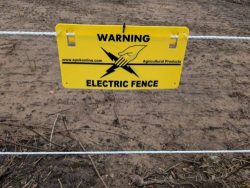

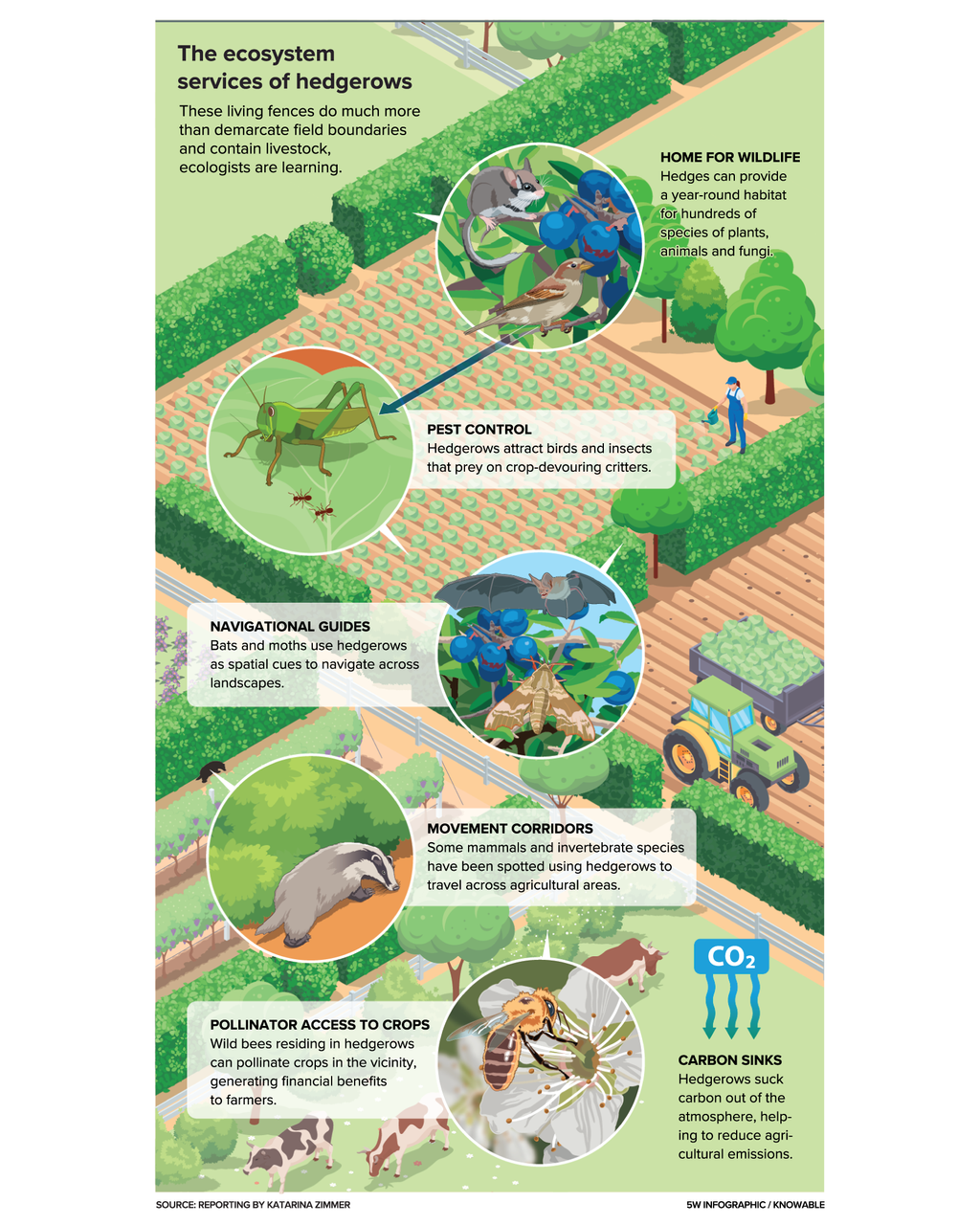


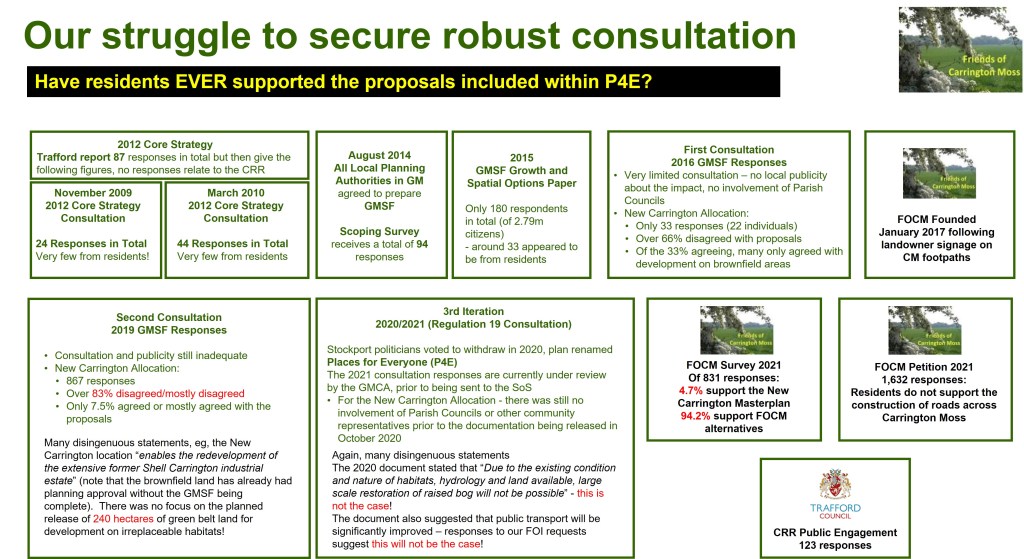

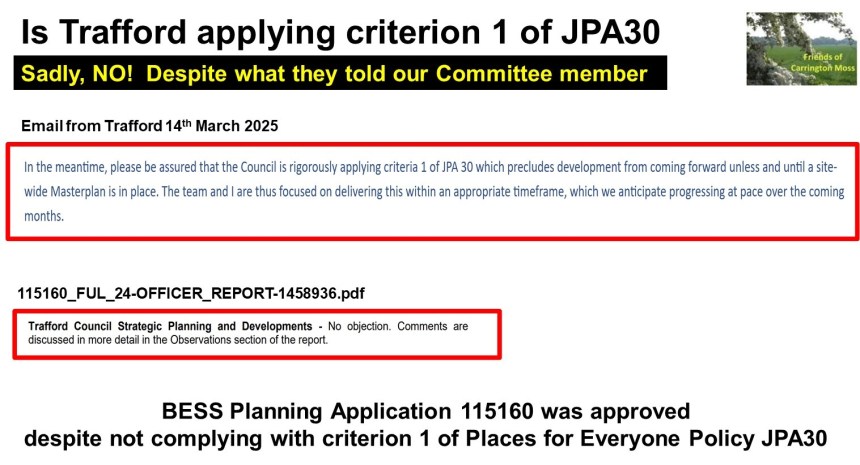


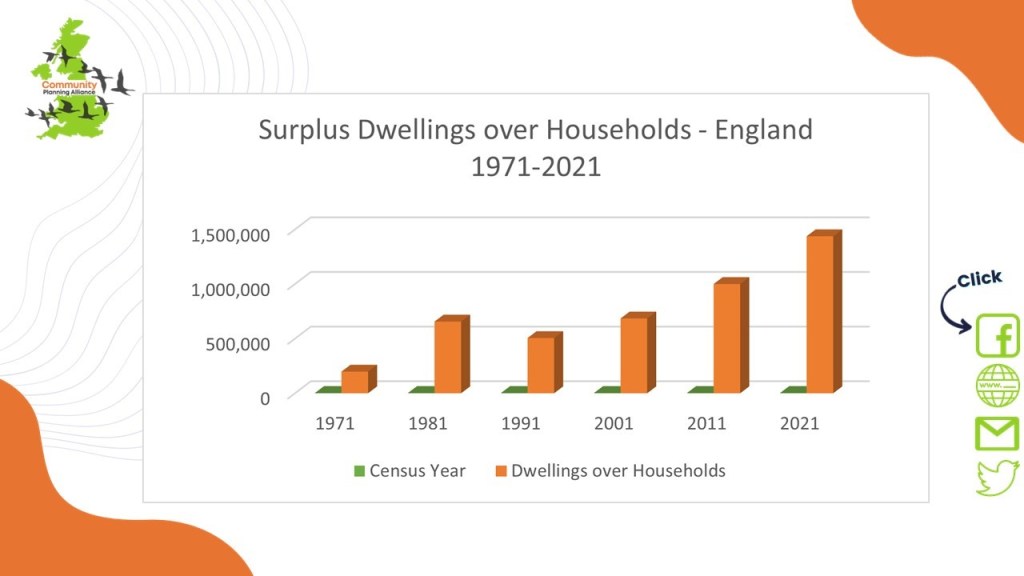
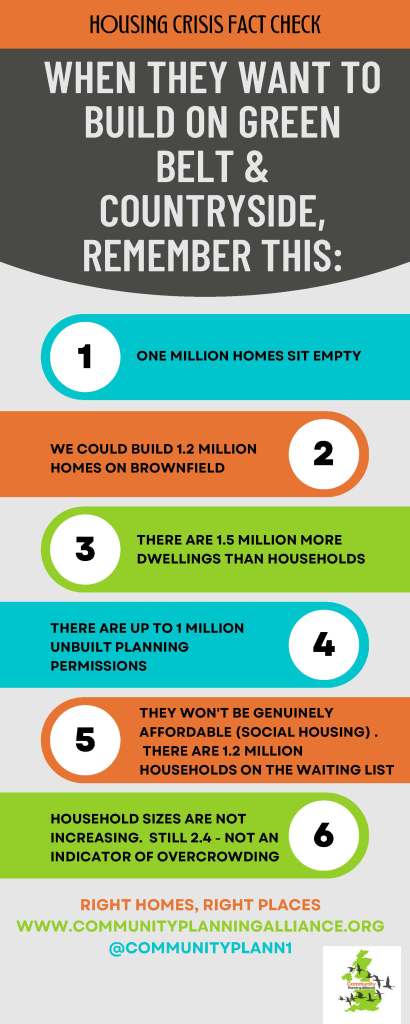

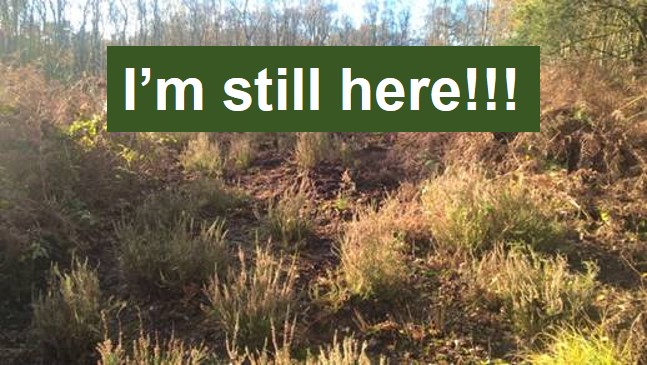


 Friends of Carrington Moss
You must be logged in to post a comment.